Bristol fashion

Watch: a visit to the Andalucía

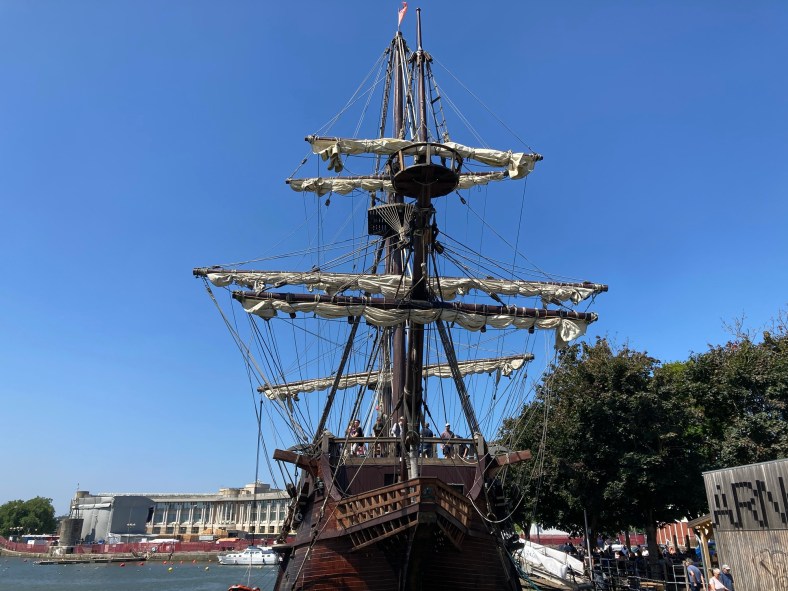
“Shipshape and Bristol fashion” are the words that come to mind on a visit to Spain’s replica galleon the Andalucía, moored in Bristol last week on a visit timed for the English city’s Harbour Festival.

Your eyes feast on beautifully coiled ropes and lovingly caulked timbers, sails folded with studied rakishness, immaculately ordered officers’ tables and spotless cannon, as you pass around the decks with the other visitors. There is a whiff of Treasure Island in the air animating the kids (of all ages, as they say) along with the pleasure of learning some new history (I had no idea that bodega is also the Spanish word for a ship’s hold but it all makes sense now).

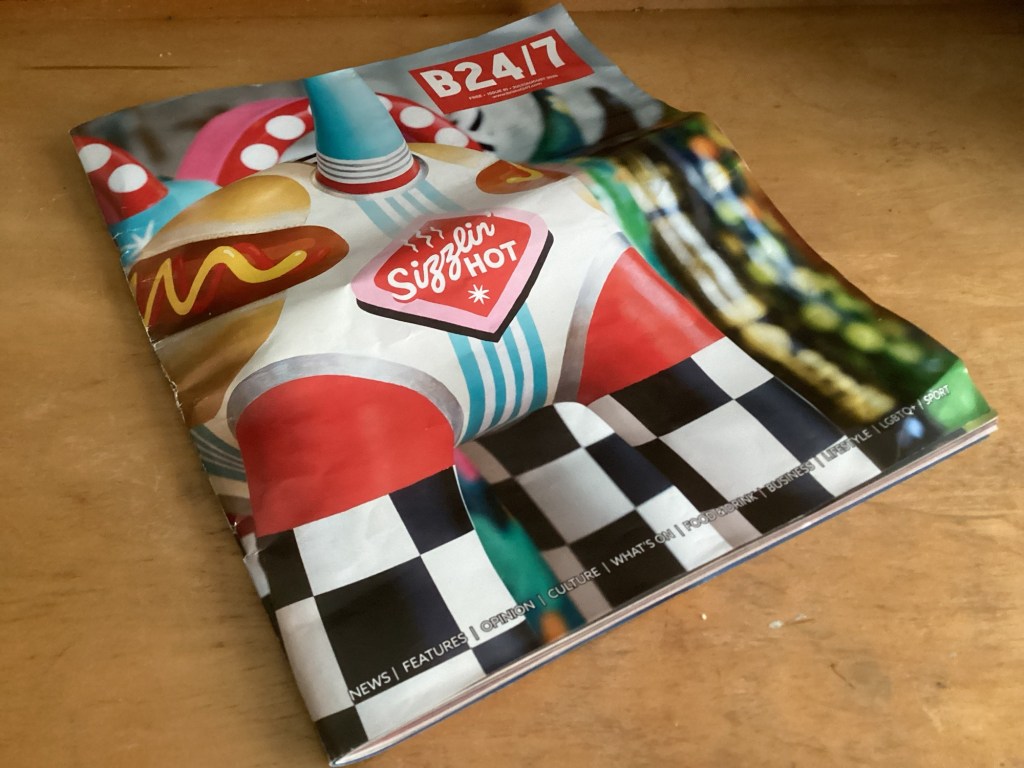
Wandering off along the waterside after my visit, past the other eye-catching ships moored in the city permanently, I ended up in a cafe on Spike Island called the Emmeline where, over a bowl of good salad and decent coffee, I leafed through the generous pages of the free local events guide, B24/7.

This was more out of idle curiosity – I went to university in Bristol and am always drawn back sooner or later to the old haunts – than with any hope of finding something for the early evening of my single day in the city, which would end with a train ride back home. So imagine the pleasant surprise of finding a play being staged just a few streets from the railway station in perfect time to let me catch my train. Not just any play either but Henry V (until 2 August), performed in the open air by an all-women company called Insane Root Theatre.
I had never seen Henry V but there were enough familiar lines – the “band of brothers” speech particularly – to intrigue me, as was the idea of a war play being staged by actresses.

In fact I enjoyed it so much that I wrote, privately, a short review. There was something quite shipshape and Bristol fashion about this production with its tiny cast of seven and minimal props – not counting the spectacular backdrop of one of Bristol’s bomb-damaged churches.

Forget Gladiator II (for now) and go see The Last Dance

Last week I scribbled down my thoughts about Gladiator II in this blog because I was a bit annoyed by some of the snark around it but also out of loyalty to the brand because I had liked the original and other Ridley Scott films, especially The Duellists. The truth is the sequel has its flaws but it’s a film bound to lose a certain kind of critic in the trees, when the (holly)wood is staring out at them with a cheeky Irish smile.

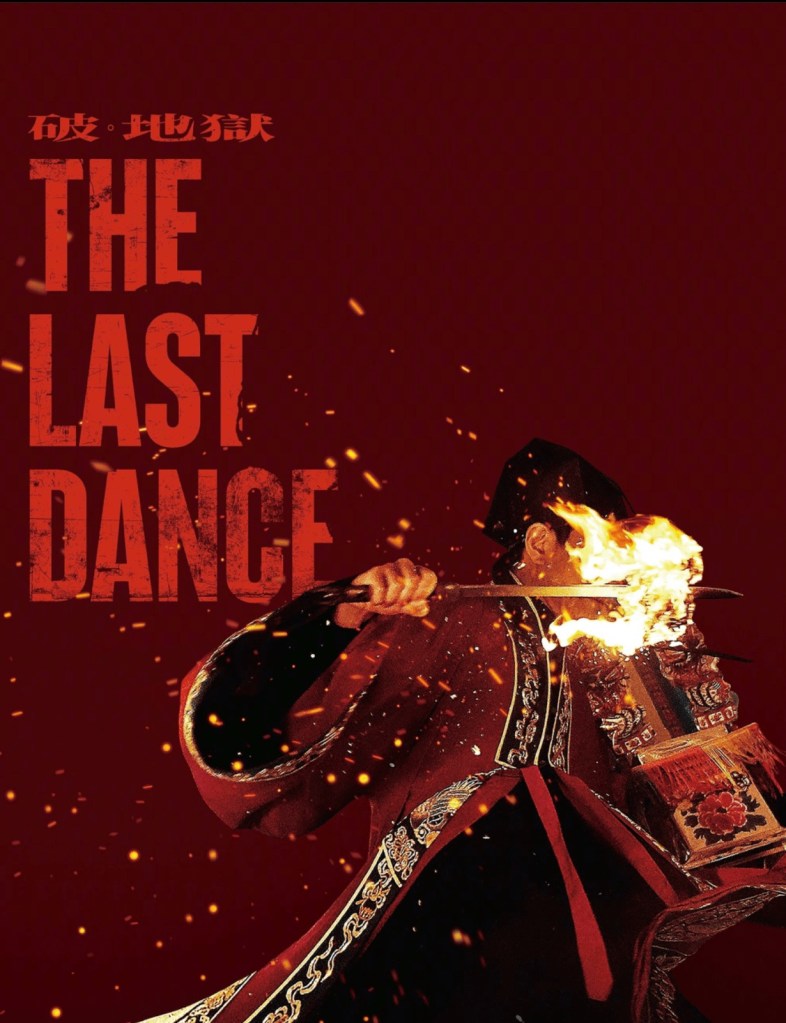
This week I reviewed a quite different new release, The Last Dance, a human drama from Hong Kong about how we cope with change and death that moved me to tears while delighting me with its quality as a piece of film – the acting, script, cinematography, even the English subtitles.

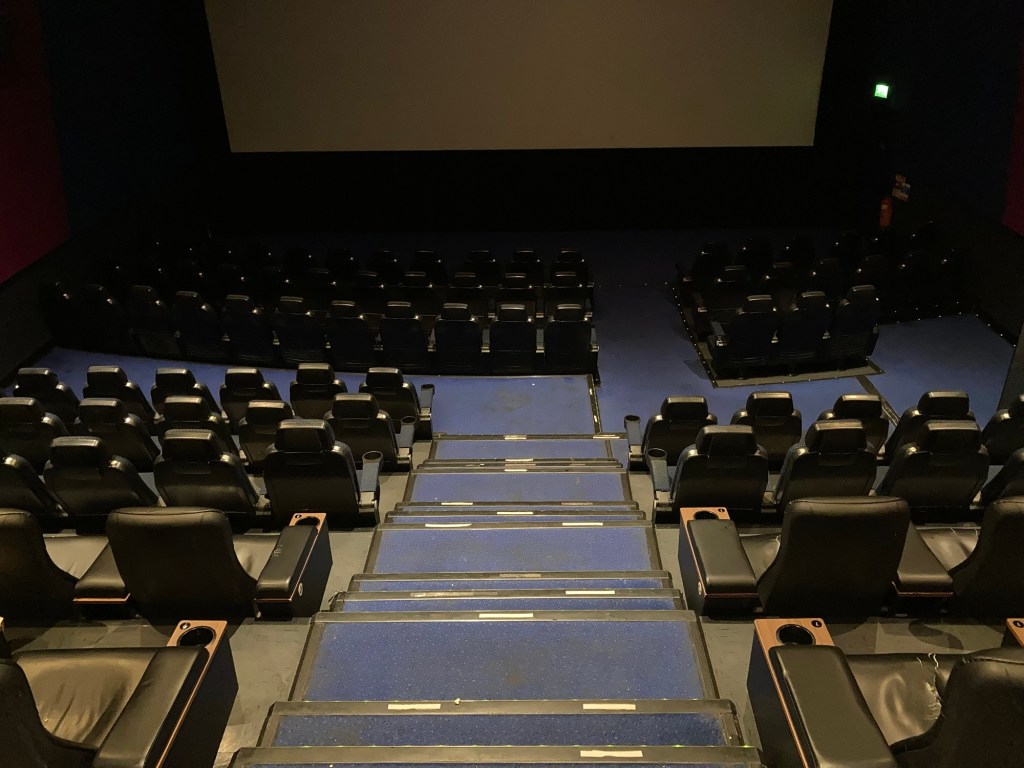
I was the only one in the auditorium at the cinema in a town near London (which has a large community of Hong Kong emigres). Ironically given that this is a film haunted by the recent pandemic, it felt a bit like lockdown – maybe the approach of Storm Bert had kept people away? – but still, I do hope more people go and watch this film. I would happily go back.

Oh, it does also feature a sword – but fewer sandals.

Thumbs-up for Gladiator II

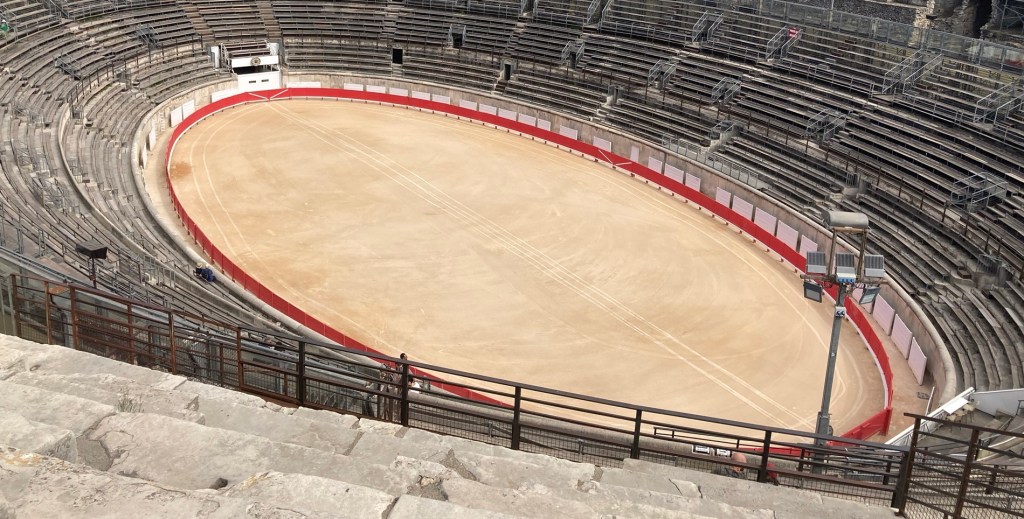
A Roman amphitheatre (Nîmes)

No man, woman or fanged baboon steps in the same river twice. Why? Because the water’s not the same – as Seneca might have written had he too watched Sir Ridley Scott’s Gladiator, then Gladiator II nearly a quarter of a century later, instead of living out his days in actual Ancient Rome 2,000 years before.

The water’s different. Don’t go catching the late show in your nearest cinema like I did if you expect to re-experience the winter-soldier thrill of army-on-tribe at the Battle of Vindobona. But do settle down with a bucket of popcorn if a summertime amphibious assault mounted by Roman galleys, worthy of Peter Jackson’s Lord Of The Rings trilogy, lights your arrows.

A Gladiator sequel cannot cut it without memorable fights and the baboon encounter is as startling as anything in the original but a simple duel fought waist-high in an actual river may stay with you even longer after the credits have rolled, not least because of its cathartic symbolism compared with a very different scene on the River Styx.

Russell Crowe’s sword is in safe hands with Paul Mescal who only bows here to Denzel Washington as the gladiators’ master with his speech on the death of an emperor which is, well, positively head-turning. When Washington goes in one ear, he does not go out the other.

If there are flaws in the sequel, they may lie in a script unlikely to rest in the mind like Crowe’s great line, “Are you not entertained?” Anything else is probably covered by cinematic licence. The large audience watching with me in the cinema into the early hours of Sunday, most of them young and as diverse a crowd as you’d find, seemed happy to the end.

It’s good to know that in his eighties, Sir Ridley can still exhilarate and transport film-goers with a new film as he did, you imagine, back in the 1970s when he first put “strength and honour” on the screen with The Duellists.

Caravaggio’s kiss comes to Belfast

Walking into an exhibition of two paintings by a Renaissance master would be surprise enough but to find myself looking into the Garden of Gethsemane shook me about right.

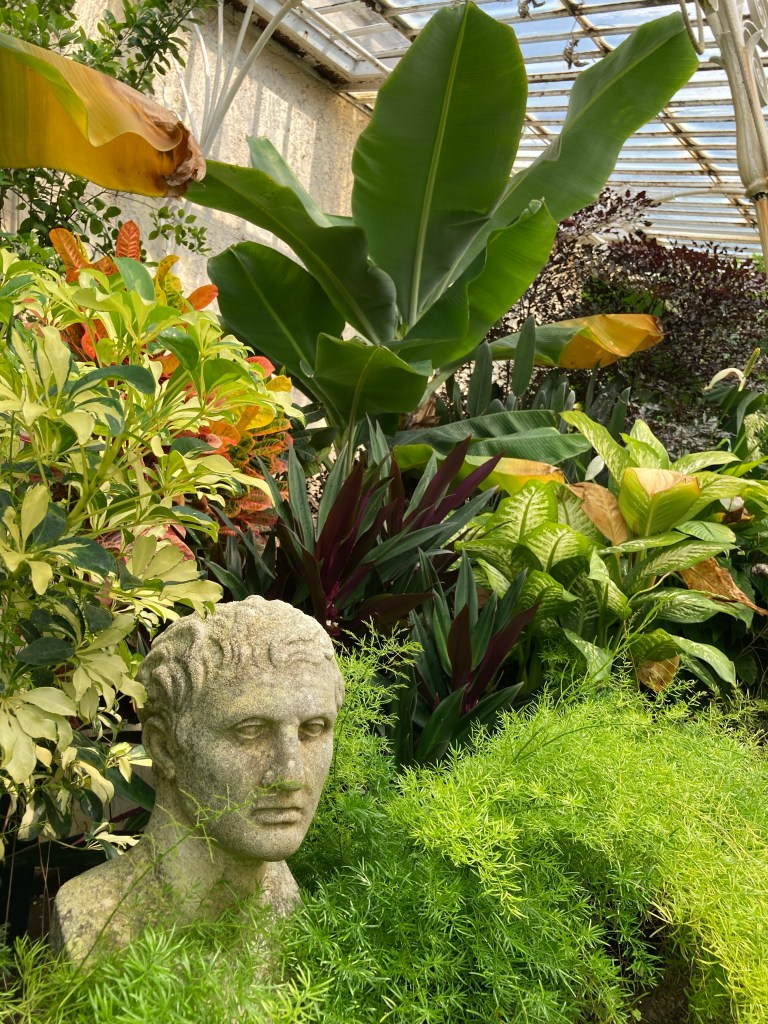
The thing is, I hadn’t really meant to be at the Ulster Museum at all, only at the hot houses nearby in Belfast’s Botanic Gardens and that was because I had started missing Singapore. I just wanted to get in and feel heat and humidity again, look at big waxy flowers and giant leaves – all in a tightly controlled, cramped space of course, for the full Singapore vibe!

As I wandered the hot houses like a hungry ghost I thought back to the hot, scented darkness of evenings spent walking in Singapore’s Botanic Garden or in the roof garden below the tower block where I worked earlier this year. To be in a garden at night with the temperature still barely below 30C was such a novelty for me that I could think only of the Garden of Gethsemane, the place in Jerusalem where Jesus Christ was betrayed according to the Bible. I have no idea how hot it would have been on that actual night nearly 2,000 years ago, but that was the illusion I was quite happy to entertain. In the Palm House on Thursday, I felt such a pang of longing for South-East Asia that I nearly cried.

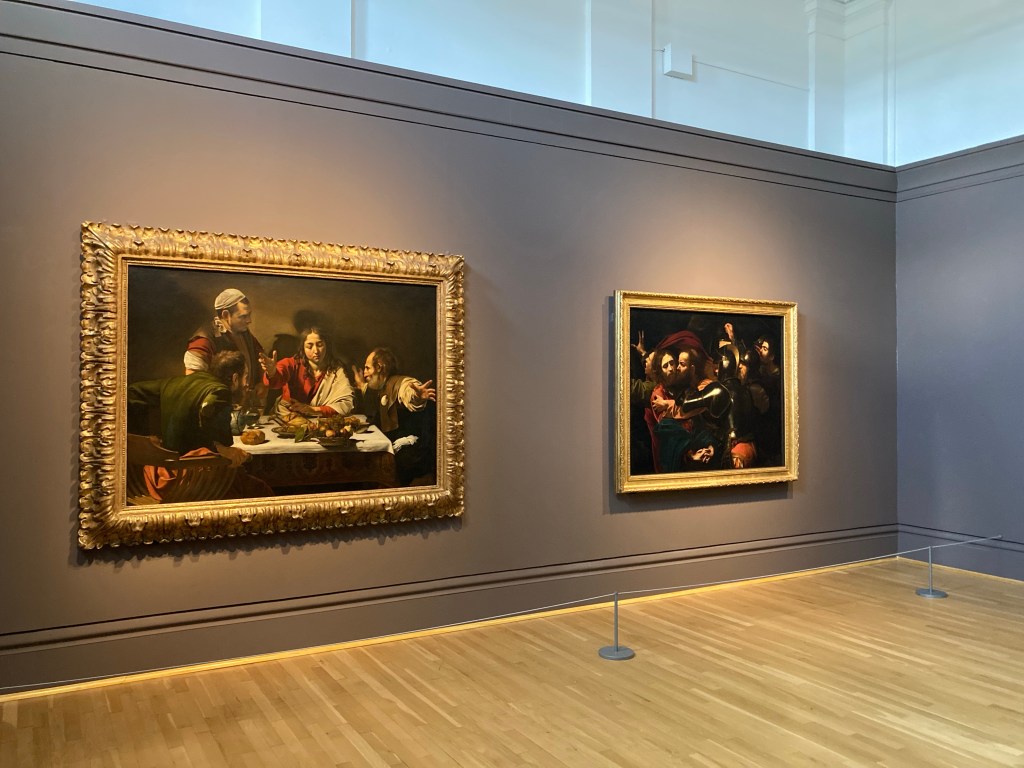
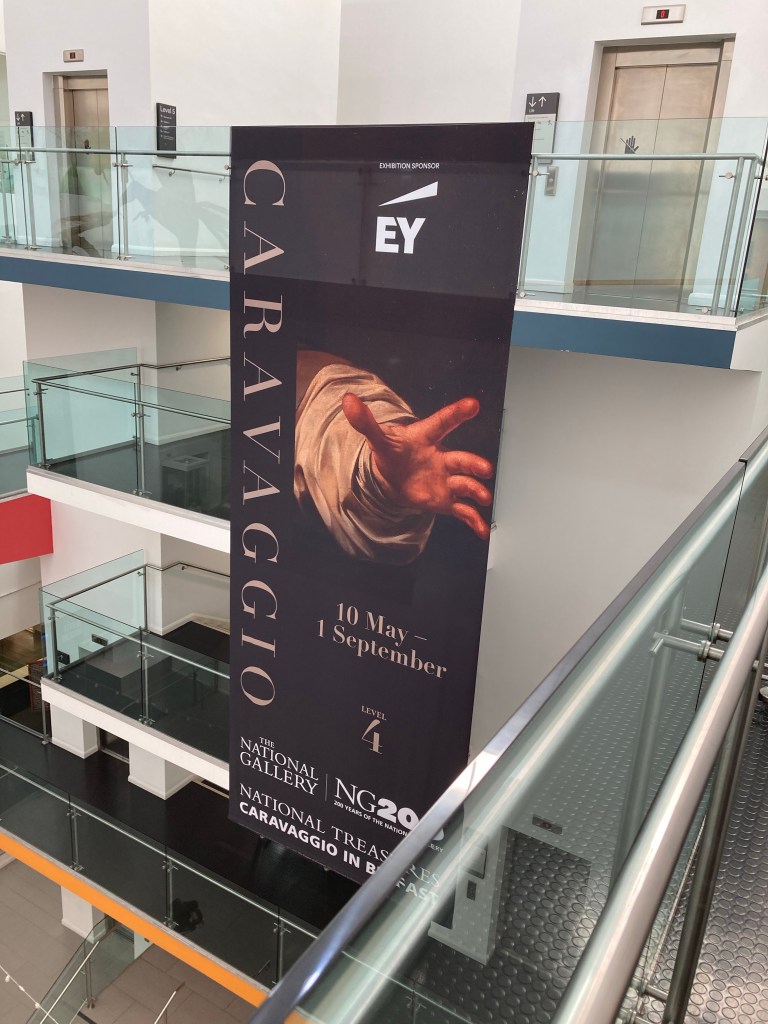
Coming out into the Botanic Gardens again, into the cool of an Irish summer afternoon, I was heading for the far exit on my way to Belfast city centre when I gave in to an impulse – I was on only the briefest of visits to Northern Ireland – to nip into the museum. It remains one of my favourite treasure-houses, if only for its Spanish Armada exhibit: the wreck of the Girona with its gold from the Americas and rubies from Burma. And what did I find inside but a rare reunion of two Caravaggio paintings which had adorned the same Roman palace four centuries ago: The Supper At Emmaus, on loan from the National Gallery in London, and The Taking Of Christ, on loan from the National Gallery Ireland in Dublin.

I couldn’t look at Emmaus without laughing, politely of course. The subject is two of Christ’s followers who have unwittingly been eating with him in an inn after his death and suddenly realise he is back from the dead and back with them. Presumably they failed to recognise him without his beard! One flings out his arms in amazement while the other clutches his chair. WTF At Emmaus might be a better title.

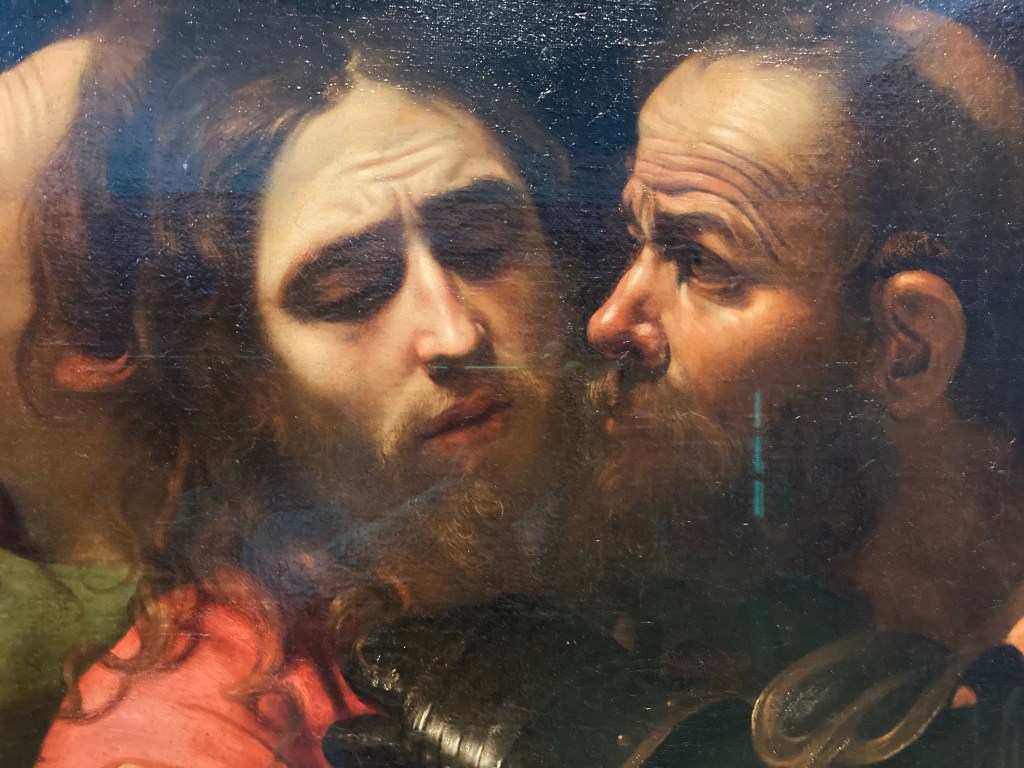
The Taking Of Christ, on the other hand, terrifies me. It shows the moment after Judas embraces Christ to identify him for the soldiers who will take him away for the ordeal that will end in his crucifixion. Judas greedily clutches Christ’s shoulder, his lips still pouting from the fatal kiss, glazed eyes staring out of flushed face. One soldier has placed a steel-gauntleted hand on the doomed man’s chest. Christ’s eyes are closed, his expression pained but resigned, his fingers locked in prayer, as someone behind him cries wildly for help. It is a devastating depiction of betrayal.

I came away thinking about many of the betrayals in my own life, great and small. Sometimes I’m afraid to shove my hand into my pocket in case I find 30 pieces of silver in there. I also thought of a few points where I had stayed loyal, to people or ideas. Such is the power of great art.

Brighter nights in Singapore

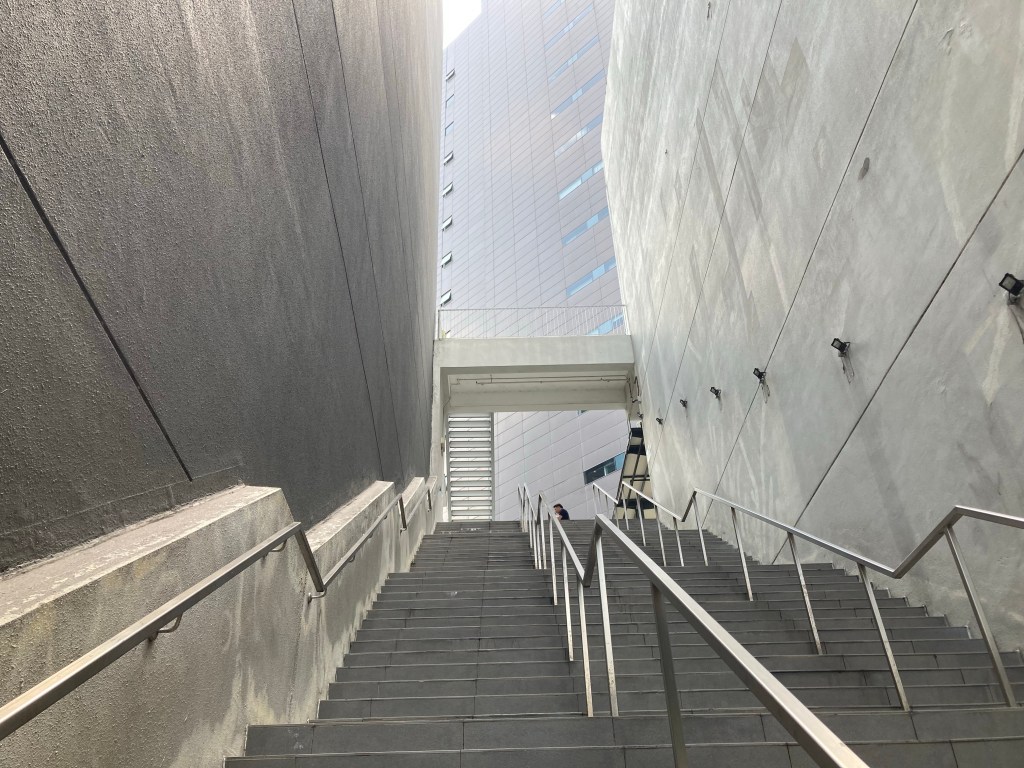
One of my favourite views: the steps to the rooftop gardens for my morning break walk

My work attachment in Singapore is nearly over and already I can see myself missing this place when I get back to England.

Will miss the frangipani flowers which are just about everywhere here

For nearly four months I have been working BBC digital news night editor shifts, mostly international but quite often domestic too, while keeping more or less normal office hours – Singapore is seven hours ahead of the UK. The wee small hours of the morning in London are bright daylight over here and it’s a smart move by our managers to have someone on who, theoretically, is rested and fresh in a different time zone. Colleagues in the New Broadcasting House newsroom were amused to see me on the screen during planning meetings in short-sleeved shirts with blue sky in the office window behind me while chilly drizzle presumably comes down on Portland Place in the dark.

Daybreak from the office window (time lapse)

Finally, too, I’ve been able to meet all my Singapore Bureau colleagues properly and get to understand the work they do on our Asian and Business coverage.

Singapore logos feel so good

I’ve spent my time off exploring the island, which could not be easier because of the public transport network.

Here, there and everywhere: Singapore’s MRT metro trains

While 04:00 starts don’t allow for much night life I’ve enjoyed the local culture and just being around such friendly people. You can read about my experiences here.

But I did do a lot of work including many days of overtime, which came up in a conversation with a local cabbie recently. “You’re working six days this week? So you’re half-Asian now.” We had a good laugh then.

Mini-dinosaurs and office blocks: just a normal work day in Singapore

New year, new continent

This orange was given to me by the receptionist at the hotel into which I’ve just checked in Singapore. It’s a traditional gift for the Lunar New Year, which falls today.

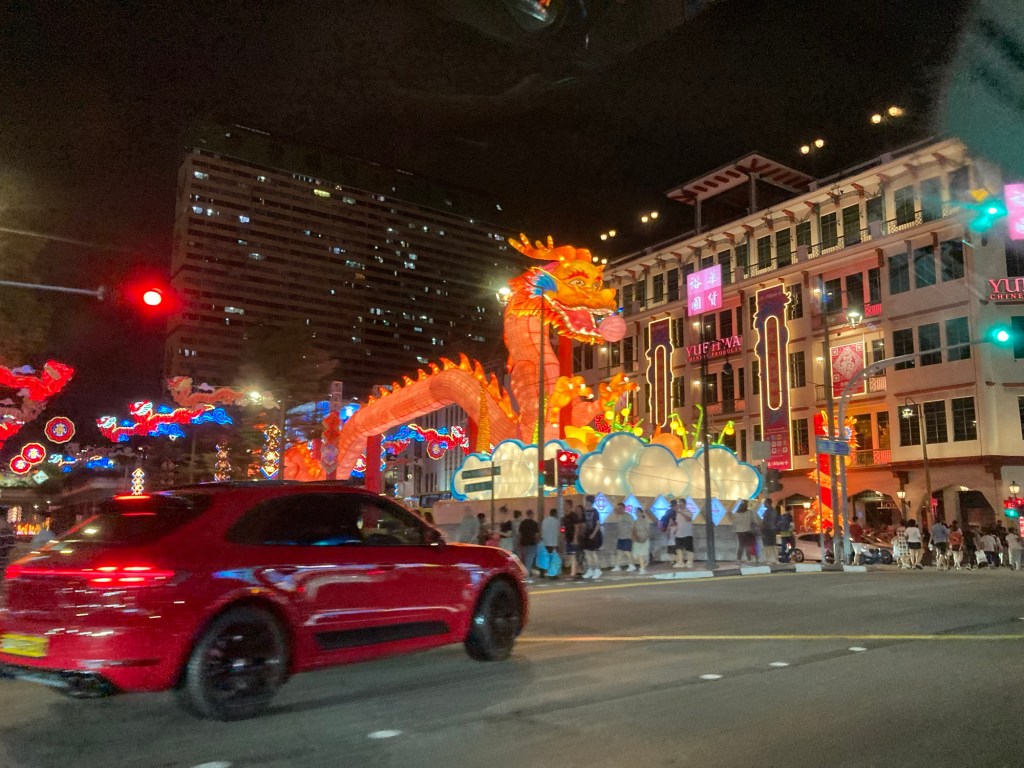
On the cab ride in from the airport we passed people out celebrating under festive dragons.

I am here for a few months, in the same editor role I had back in London, but I also aim to record my impressions of Singapore in my spare time.

Good news from Belfast

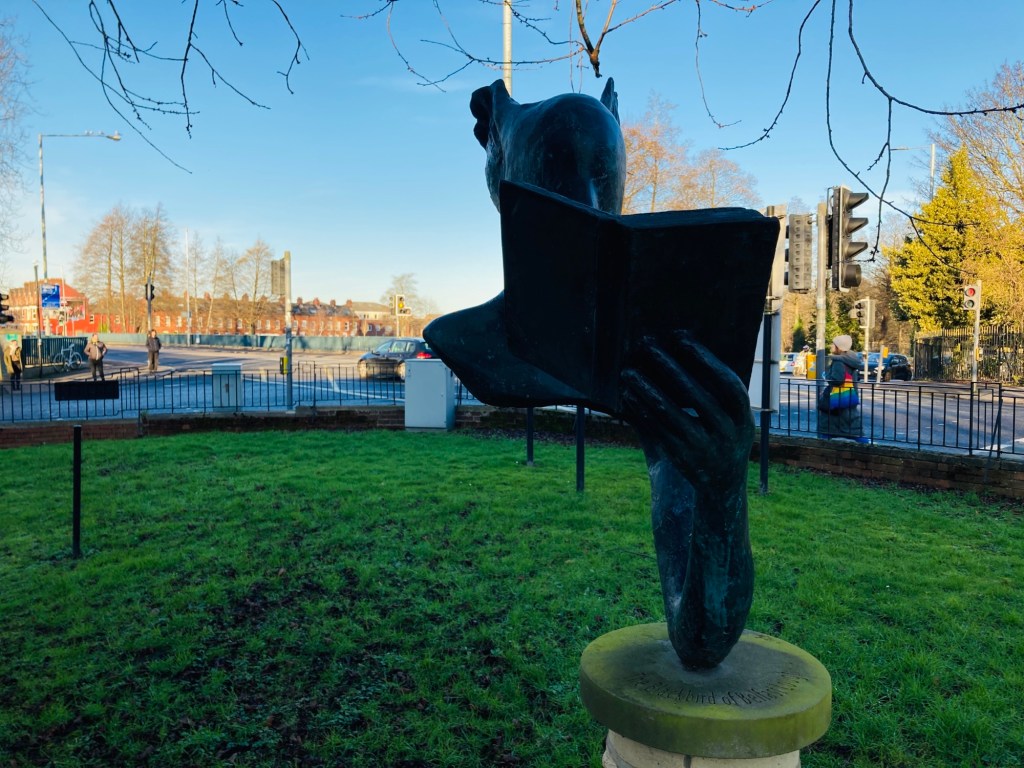
Okay, it’s not exactly news when it’s 6 weeks or so later but I learnt only recently about the return of a sculpture stolen from outside a Belfast library.

I’d been back over in November when the bronze piece was stolen from Ormeau Library one dark evening and it gutted me at the time, not least because I had made, for pleasure, a video of the area back at the start of the year. The sculpture of a young woman reading a book by Daniela Balmaverde had always cheered me up and it tied the area together perfectly, standing not just outside a library but opposite a beautiful park and on the bank of a river leading to the sea – a symbol of freedom and possibilities. I had it right at the start of my video:

It appears that a scrap metal dealer tried to sell the sculpture to an antique dealer whose suspicions were aroused. Now it has been returned to the library.

Antisocial media

Samson Slaying A Philistine – a sculpture at the V&A as topical this year as ever it has been

As the new year sets in I think again of making more active use of social media rather than just treating it as a news source, which my work as a journalist entails.

The problem is that I don’t quite know what to post let alone where.

For more than a year I have been working in the London newsroom solely as a digital news editor, specifically a night (GMT) editor, most of the time in World news, occasionally covering the UK (ooh that by-election result buzz). While I love the work (I offer the heavy parts up for my many sins) I have little to show for it. What is there to say, really, about keeping the news seam invisible? It is demanding, intense work that leaves no space for sharing on social media. My “sharing” in work hours is basically sending out BBC push notifications to the world and possibly the occasional breaking news tweet.

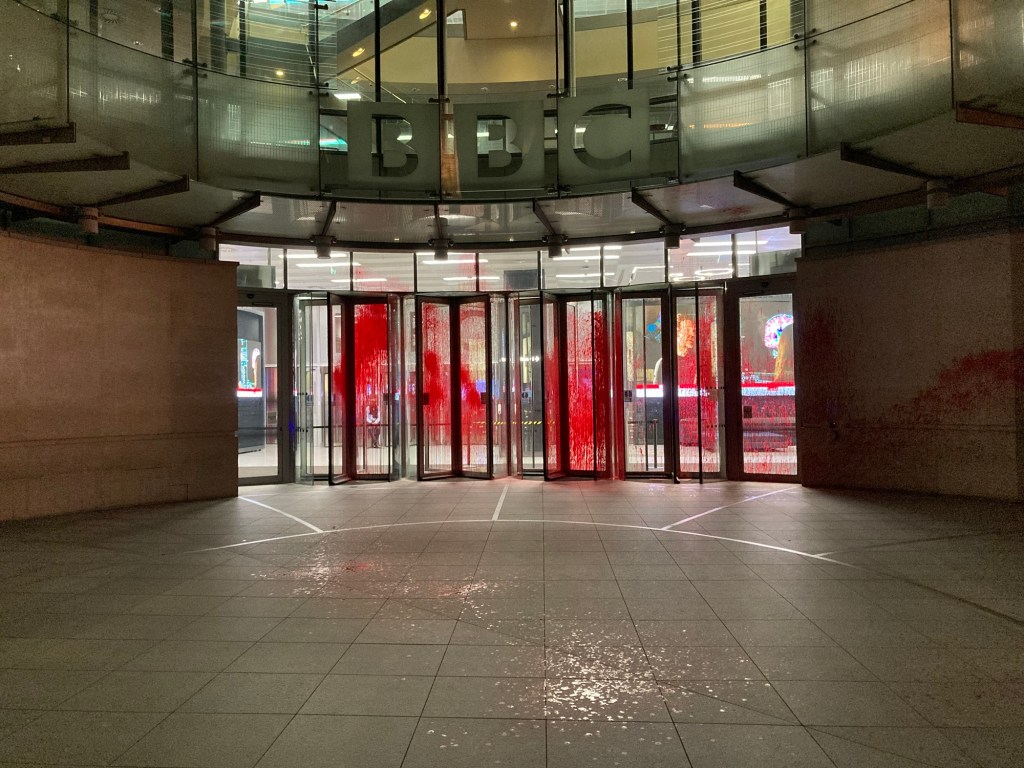
On one of my night shifts at the height of the Gaza war the BBC got splashed with red paint as we were beavering away down in the newsroom

Outside work I still have the odd bit of content I want to share which mainly comes down to things that interest me on my travels, modest as they may be. In September I spent a week holidaying in eastern France and wrote, for instance, this private account of my trip over from England and experience of a street opera: My Saturday with the salamanders. But where do I share?

Twitter was my obvious medium of choice as a journalist but since it became X it is more birdcage than bird in my experience. For some reason the algorithm strangles my posts. I suspect it has nothing to do with lack of subscription and is probably down to factors like muting (I imagine I annoyed a few people back in 2022 by tweeting that the number one priority regarding the new war in Europe was to keep it contained because any direct fight between Nato and Russia would spell the end of all of us – that is still my personal conviction). In any case, my X account may as well be locked as open for all the circulation my posts get. I am ready to try other social media but lost interest when my attempt at a Threads account failed to get any traction.

My main issue with X is the algorithm which butchers the tweeting experience – don’t you love AI, people? Almost as bad, however, is the way the sewer which always ran just underneath – out of sight until, for instance, you searched for #Lesbos for a migration crisis story and came up with porn – now contaminates the stream. At one point I got to hate the churn of pub bore rubbish and snuff videos so much that I began deleting my timeline, not wanting to be associated with Zombie Twitter (I stopped at 2019, remembering there were published BBC stories linking to some of my tweets in the preceding years such as a Moment on election time in a French no-go zone).

My workaround for now is to post more on my actual blog, here on WordPress, and share links to Twitter and Facebook. Hopefully you won’t find anything resembling a political opinion and may actually like some of the stuff I write or film.