This orange was given to me by the receptionist at the hotel into which I’ve just checked in Singapore. It’s a traditional gift for the Lunar New Year, which falls today.
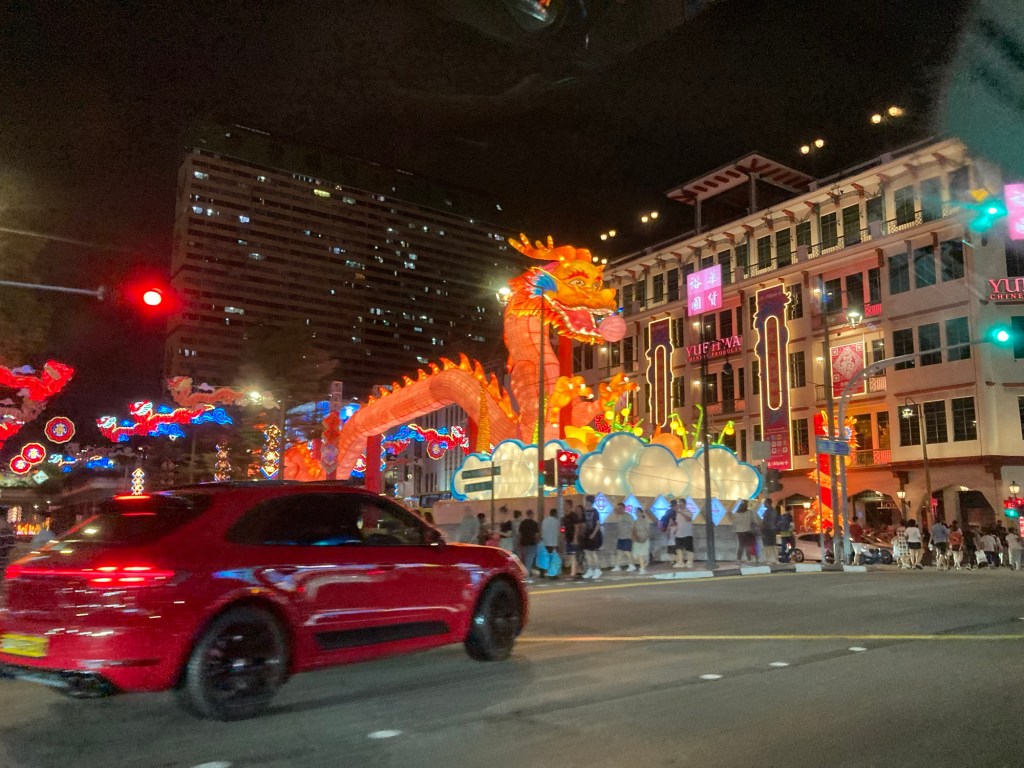
On the cab ride in from the airport we passed people out celebrating under festive dragons.
I am here for a few months, in the same editor role I had back in London, but I also aim to record my impressions of Singapore in my spare time.
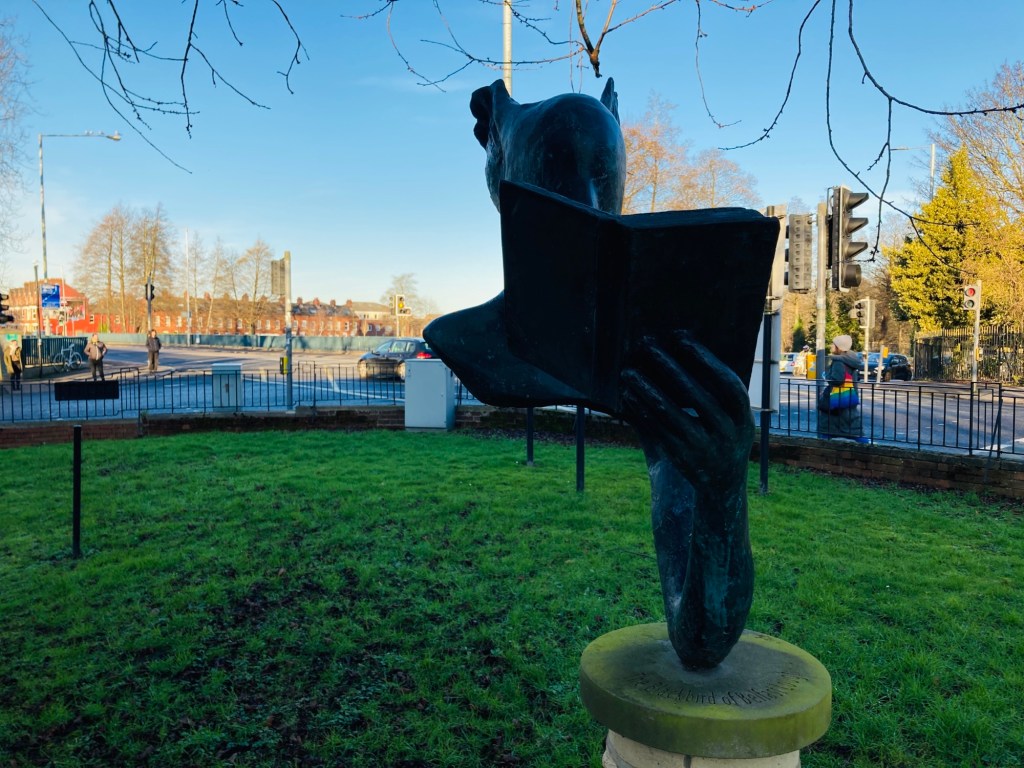
Okay, it’s not exactly news when it’s 6 weeks or so later but I learnt only recently about the return of a sculpture stolen from outside a Belfast library.
I’d been back over in November when the bronze piece was stolen from Ormeau Library one dark evening and it gutted me at the time, not least because I had made, for pleasure, a video of the area back at the start of the year. The sculpture of a young woman reading a book by Daniela Balmaverde had always cheered me up and it tied the area together perfectly, standing not just outside a library but opposite a beautiful park and on the bank of a river leading to the sea – a symbol of freedom and possibilities. I had it right at the start of my video:
It appears that a scrap metal dealer tried to sell the sculpture to an antique dealer whose suspicions were aroused. Now it has been returned to the library.
Samson Slaying A Philistine – a sculpture at the V&A as topical this year as ever it has been
As the new year sets in I think again of making more active use of social media rather than just treating it as a news source, which my work as a journalist entails.
The problem is that I don’t quite know what to post let alone where.
For more than a year I have been working in the London newsroom solely as a digital news editor, specifically a night (GMT) editor, most of the time in World news, occasionally covering the UK (ooh that by-election result buzz). While I love the work (I offer the heavy parts up for my many sins) I have little to show for it. What is there to say, really, about keeping the news seam invisible? It is demanding, intense work that leaves no space for sharing on social media. My “sharing” in work hours is basically sending out BBC push notifications to the world and possibly the occasional breaking news tweet.
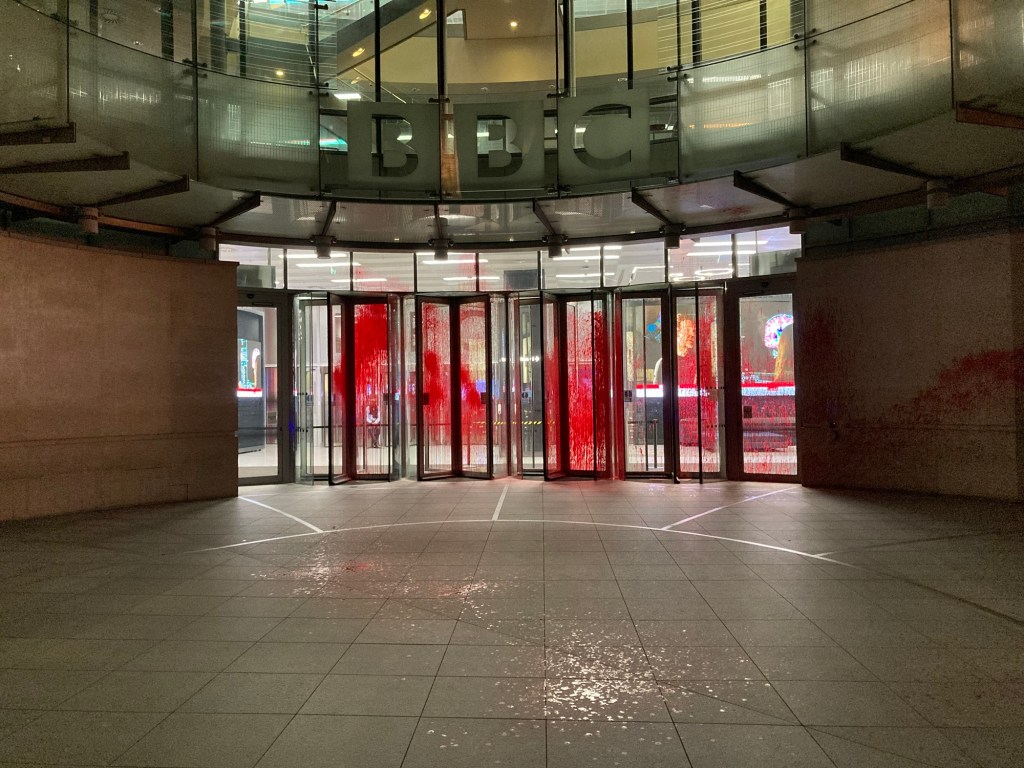
On one of my night shifts at the height of the Gaza war the BBC got splashed with red paint as we were beavering away down in the newsroom
Outside work I still have the odd bit of content I want to share which mainly comes down to things that interest me on my travels, modest as they may be. In September I spent a week holidaying in eastern France and wrote, for instance, this private account of my trip over from England and experience of a street opera: My Saturday with the salamanders. But where do I share?
Twitter was my obvious medium of choice as a journalist but since it became X it is more birdcage than bird in my experience. For some reason the algorithm strangles my posts. I suspect it has nothing to do with lack of subscription and is probably down to factors like muting (I imagine I annoyed a few people back in 2022 by tweeting that the number one priority regarding the new war in Europe was to keep it contained because any direct fight between Nato and Russia would spell the end of all of us – that is still my personal conviction). In any case, my X account may as well be locked as open for all the circulation my posts get. I am ready to try other social media but lost interest when my attempt at a Threads account failed to get any traction.
My main issue with X is the algorithm which butchers the tweeting experience – don’t you love AI, people? Almost as bad, however, is the way the sewer which always ran just underneath – out of sight until, for instance, you searched for #Lesbos for a migration crisis story and came up with porn – now contaminates the stream. At one point I got to hate the churn of pub bore rubbish and snuff videos so much that I began deleting my timeline, not wanting to be associated with Zombie Twitter (I stopped at 2019, remembering there were published BBC stories linking to some of my tweets in the preceding years such as a Moment on election time in a French no-go zone).
My workaround for now is to post more on my actual blog, here on WordPress, and share links to Twitter and Facebook. Hopefully you won’t find anything resembling a political opinion and may actually like some of the stuff I write or film.
“Daddy, what did you do during the rail strike?” Well, I was at home but I was meant to travel, from Barnstaple back to Berkshire via Exeter, after a week’s holiday in the English countryside, and had ended up going a day early, as allowed by my rail company, GWR, to avoid Saturday’s industrial action. With ticket restrictions lifted on Friday, I broke my journey at Exeter for 6 hours and did a bit of unscheduled budget tourism, wading my way through a sea of students as I walked into the city.
Here are my seven pleasures with a travel tip tucked in at the end.
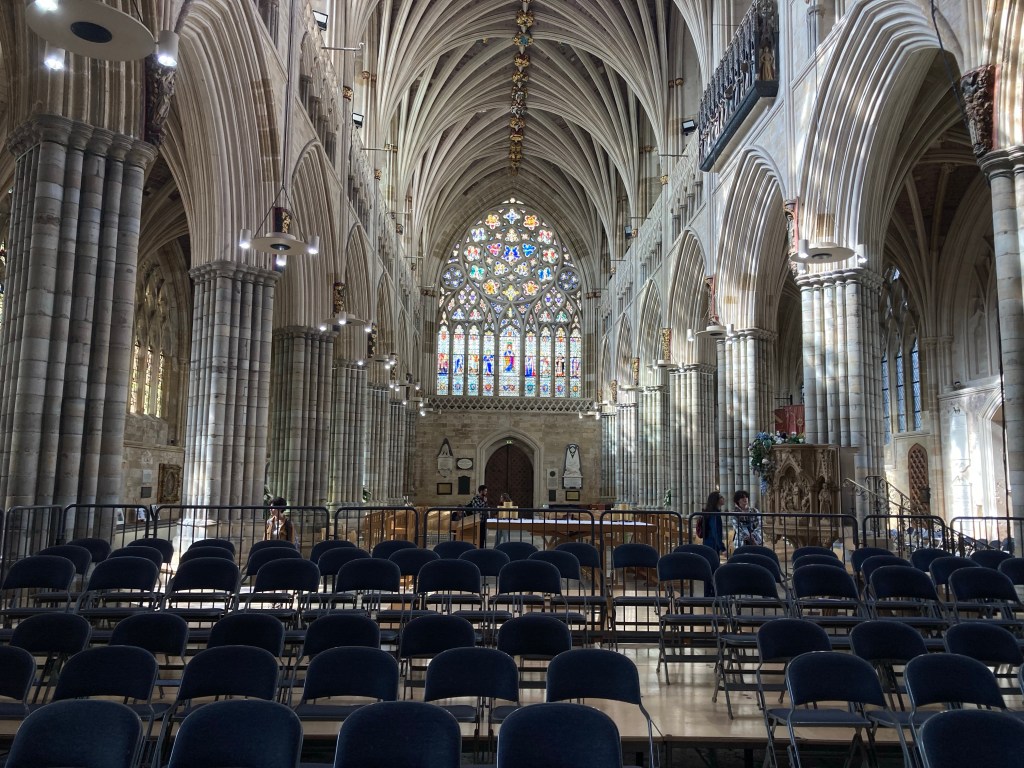
Pleasure No 1: The cathedral. A huge, beautiful relic of the Middle Ages and intervening centuries – you can chart the course of the British Empire in the memorials. Pray for free or pay £7.50 and still pray if you want to – there are plenty of quiet chapels waiting to be used. Top tip: gift-aid the ticket price (if you can) and you get free admission with the same ticket for a year.
Pleasure No 2: The city museum – the Royal Albert Memorial Museum or RAMM for short. Went in to see a scale model of the original Roman camp which gave rise to the city – I remembered this from a similar quick visit years back. The diorama was gone but the museum has been extended to let in light and space, and it fits in a lot of local and global history. I found a bloke who used to double as a Roman military engineer and who also remembered the diorama as well as the fun of replica Roman military gear, and that cheered me up. If you are interested in Roman stuff, you could do worse than scan the small number of finds on show, note the city streets where they were unearthed, and go out and walk around them, using your imagination.Fun bit: a machine with a tiny mechanical museum installed behind the glass which comes alive each time you drop in a £1 coin. The money goes straight to RAMM.
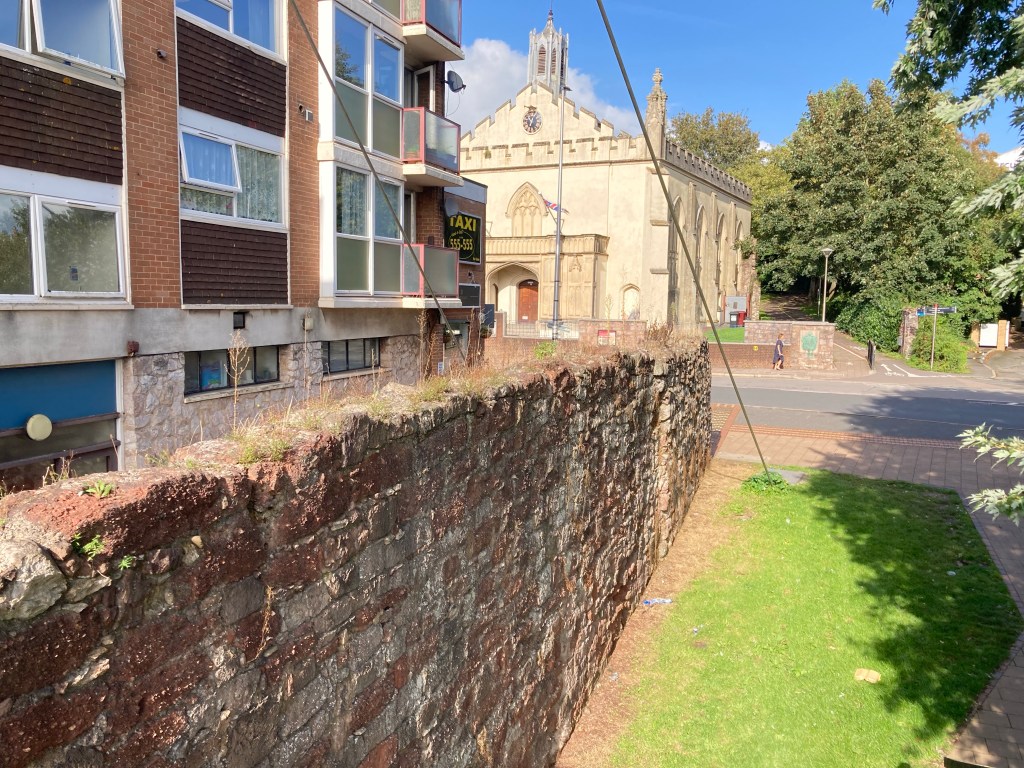
Pleasure No 3: Following the route of the old Roman walk down to the quays and watching the pleasure craft and swans on the waters of the River Exe. Cafes and craft shops as far as the drunken eye can see.
Pleasure No 4: The Oxfam Bookshop was all the shopping I wanted to do, but the city is crammed with every store and bodega you could probably desire. Some store you thought had disappeared into the internet may well be alive and kicking up an alley in Exeter.
Pleasure No 5: A huge mug of piping hot black breakfast tea in the museum cafe with a piece of almond cake and a bag of local crisps. Nutty black Americano coffee with delicately orange blossom-flavoured carrot cake at a cafe called Devon Coffee, where USB ports dot the wall and the other customers are fun.
Pleasure No 6: Watching huge, muscular sea gulls stalking people eating their lunch on the green outside the cathedral while frightened pigeons circle in hope of crumbs.
Pleasure No 7 was people:
A young couple in a rowing boat out on the water who seemed unable to paddle together but too much in love to care
A man escorting two beaming women who gave me directions to the cathedral. “It’s behind all that stuff up there”, he said, smiling too, the “stuff” being other buildings
A young lady with bright ear-rings and coloured hair, dressed like a fugitive from a desert caravan, who cheerily parted with a friend in a cafe by crying out, “Bye, bitch!” I propose this should be written in big letters over the ticket gates at the city’s railway stations to raise the tone of departures
That travel tip for those who don’t already know: if you need to leave luggage, and the railway stations no longer offer the service, there is a website called Stasher which finds you locations willing to accept it for a modest fee. I safely left my case at a hotel near Exeter St David’s Station for just under £7.
This year I am working night shifts on a full-time basis and take any chance to get out in the sun on days off. Saturday was a favourite walk again to the site of the Roman town of Calleva, near Silchester in Hampshire. I found myself at sunset looking into the field where the forum/basilica once stood. Foundations of the town’s nicely ordered buildings are buried beneath the soil only to be exposed every so often when there is (enough funding for) a dig. In a way the absence of any trace of the vanished civilisation above the ground here is as striking as the fabulous Roman ruins which dot Rome or Arles.
Private piece of travel writing about Mallorca, no connection to the BBC
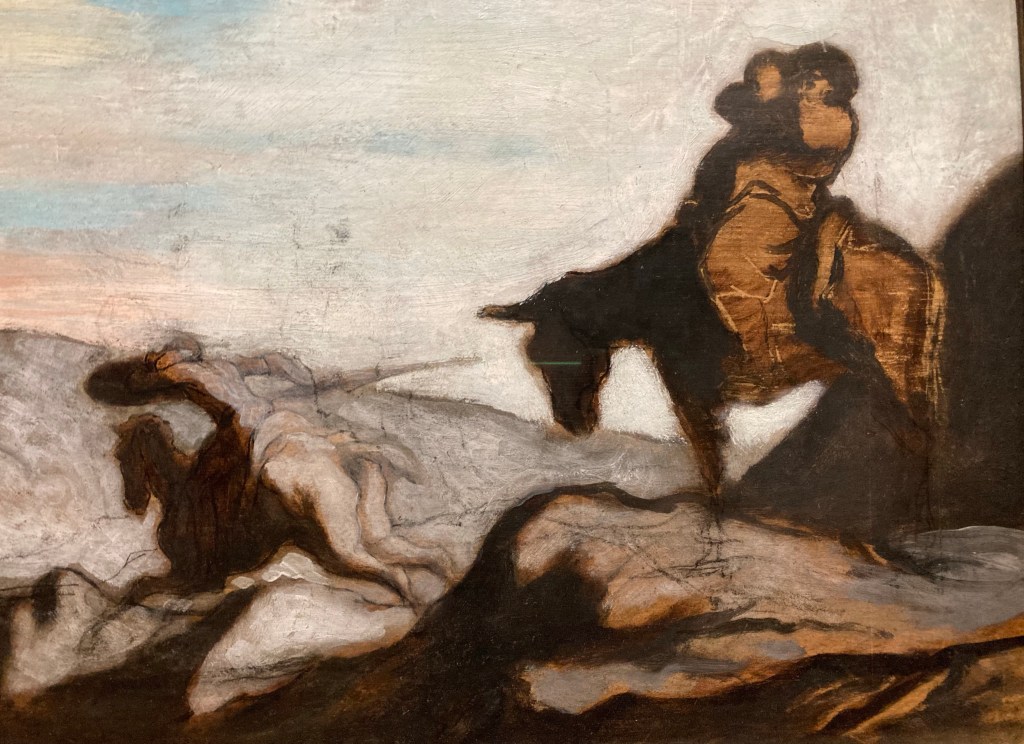
Don Quixote and Sancho Panza, Honoré Daumier, National Gallery London
Think of a tsunami frozen in time as it sweeps away a beachfront and you’ll be close to how I felt when I spotted the huge boulder embedded in the dry-stone farmhouse on Mallorca. It was on the valley slope opposite – the aftermath of some rockfall in the distant past, I assume. Such was my shock I yelled out to other passengers on the bus to look down. The most existential thing ever! Someone’s home smashed by a giant rock! The home of someone whose living must have been hard enough already on a rocky mountain slope. A peasant, subsistence landscape not unlike my ancestors’ own depopulated valley in Northern Ireland, Glenrone, where the slopes bear the outlines of long-abandoned potato ridges dug out of the stoney soil.
Glenrone 2021
Here on Mallorca it was like the myth of Sisyphus but without the possibility of even pushing the boulder away a little.
It was just a glimpse. On and up our little bus pushed, following the misty mountain road to the sanctuary of Lluc, the island’s most famous holy place. A few miles from the Christian shrine, I sat back in my seat reflecting on how meaningless life could seem, more fool’s errand than journey.
I also thought about a decently turned out chap I had watched earlier boarding a bus on the island full drunk but trying desperately not to let it show. He’d been having a grim, though polite, argument with an imaginary collocutor at the stop before the bus pulled up, but he drew in his hand and set the dispute aside in order to get on, and the driver did let him on, an act of pure compassion. Another man might have crumpled up on a bench but this one kept going, by a huge effort of will. And the driver gave him a chance to get from his A to his B, where I watched him through the window shuffle off.
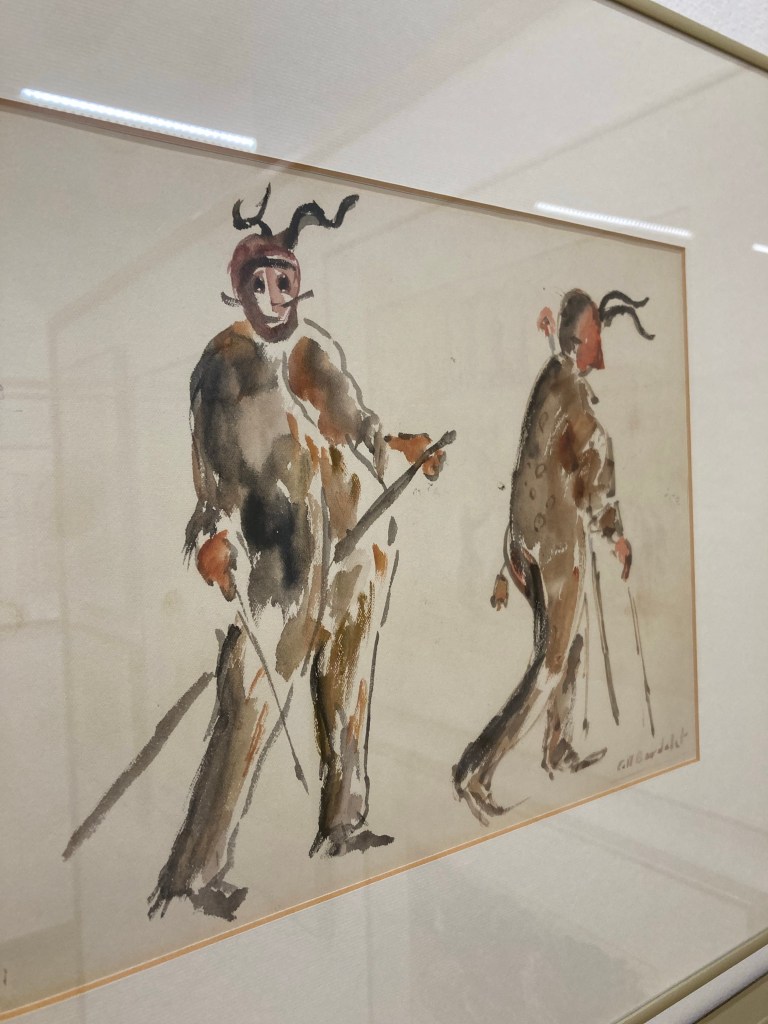
Arriving at Lluc, I wasn’t really hoping to have a spiritual experience, just to satisfy my curiosity, and I did in fact get carried away by the excellent secular art in its museum – I hadn’t seen that coming.
Works by Catalan painter Josep Coll i Bardolet (1912-2007) in Lluc Museum
I was taken too by the view down into a neighbouring valley, a green oasis surrounded by rocky mountains.
Lluc
A third distraction was the scent of cooking from a restaurant beside the basilica. Like in the Mullah Nasreddin story, I had only enough money in my budget to pay for the aroma of their delicious (?) sauce but I was still as happy as a pig in muck. I almost forgot the true spirit of the place. If I sensed it at all, it was for a moment in the breeze maybe, near a makeshift memorial to lost loved ones in the gardens.
By the time the return bus had arrived, rain was blowing in and the trip back down to the town of Inca was a blur in which I could barely see that boulder which had given me such a start.
I had two hours before a play I wanted to see, and headed off in the downpour to get something to eat. Despite my umbrella, I got soaked walking to a cafe in the town centre, and was still damp when I re-entered the rain with a map app for my guide. The walk was fairly long and lonely, down empty streets, a far cry from the lively scenes at Inca’s great annual fair which I saw in November, though the elegance of some of the old buildings tickled the feathers of my inner culture vulture.
Inca’s Dijous Bo fair
At one point I passed a shuttered warehouse where oil had evidently been spilt on the pavement. I say evidently because suddenly I was down on the paving, falling painfully on my elbow and grazing my knee, twisting the umbrella handle. Shocked I might be but damned if I would give in and head to the nearby railway station for a warm dry carriage, rolling back to the great city of Palma and its comforts. Rising up in pain, I tramped on, discarding my collapsing umbrella. I was determined not to miss the play having seen almost nothing on a real stage for a couple of years, just like tens of millions of other people.
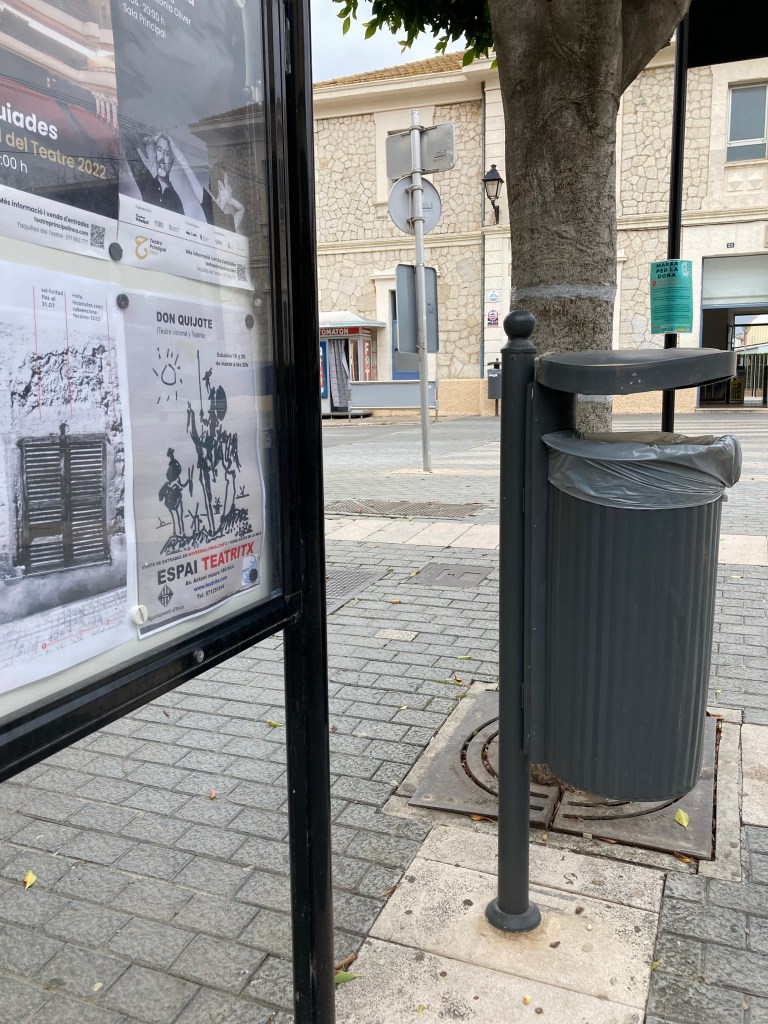
And then, spilling a pool of light on to the dark wet pavement like some kind of urban shrine, there was the cabaret theatre, Espai Teatritx, as small and cosy as a home, and with everything just so: a welcoming box office with a stack of posters, a stage, and a few props and chairs for the audience coming to see Don Quixote.
Theatre poster near Inca Station
It was an arrangement so simple you could imagine Don Quixote and Sancho Panza themselves dropping by to see the show in some innyard or fairground. To see themselves as conjured up by a company of players at the top of their game, and later chuckle over the coups de théatre – the visionary and the realist seeing themselves for what they were and enjoying the delight of the audience.
I still grin at the jokes in that evening’s performance. I just wish I could go back and see their next production, Seven Ways To Be Hamlet. Writing this a month afterwards I tap my elbow. It still hurts but it was worth the journey.
Me walking an irrigation canal somewhere on Mallorca
Who’d have thought we’d all be having a plague year? A kind of year several generations of people never saw.
As a journalist based at BBC Broadcasting House in London, I have seen some big changes to the way I work since the lockdown began in Britain in March.
One is the form of the news. Now the daily live page is the main focus of the BBC website’s resources and rightly so as the coronavirus pandemic stalks the planet. What that has meant for me personally is editing or subbing a stream of content, with the line between World and UK news blurred. And for want of a newsroom there’s the Slack app and Zoom. Occasionally I will be writing or editing stand-alone web stories or cutting video but to date, most of my shifts seem to have been absorbed by the live page.
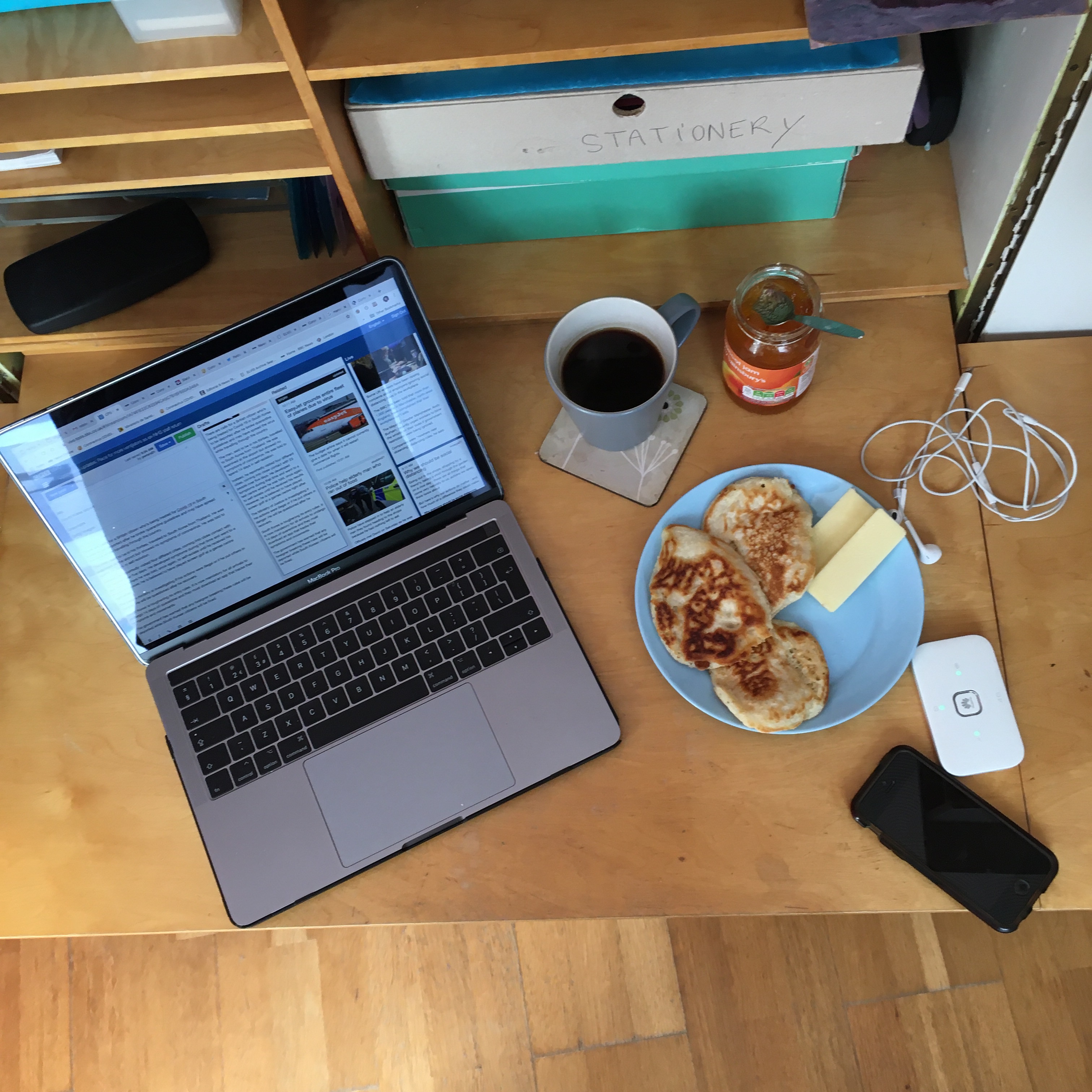
The other change is how I work physically. My trusty old BBC MacBook Pro, friend from overseas reporting trips and essential tool for my video reports, has now become my mobile BBC bureau. Because of social distancing, my colleagues and I have been regularly asked to work from home. So on a screen in my front room I find myself producing news for the world while the binmen go to work outside my window. Yes, I do still wear trousers.
At the same time, some roles on World Online require you to be there at Broadcasting House so I still come in regularly. Every shift begins with the search for a desk at a safe distance from others and then a laborious, careful wiping-down of the work station. If the pandemic has a smell for me, it is the smell of surgical spirit. If it has a texture, it is cotton on my lips.
So it’s either my front room or Broadcasting House but nowhere else for now. I had hopes of getting back to Europe this year for new reporting trips but that’s all on hold.
Just added a page about my initial experiences as a BBC “digital ninja”. It’s been a while since I posted here. Was very busy at work, spending most of the time on World Online core desk in New Broadcasting House but with few forays abroad. Outside the BBC, have done a tiny bit of (unpaid) journalism which usually pops up on my Medium page, and have tried to make time for videography. One thing I never wanted to write but felt I had to was a tribute to my mother, who passed away this month.
It’s a couple of years since I returned to the core desk at World Online, where my desk work flips between writing the top story of the day and editing. I’ve had a couple of reporting trips to Spain in rapid succession, both to the same place, Catalonia – after the August terror attacks and following the referendum day violence on 1 October. The challenge on both occasions was to gather content on the move, which is what breaking news is all about, of course.
“About 200 tremors.” That’s the line (from Italian seismologists) that stood out for me when I was writing about Wednesday’s multiple earthquakes in central Italy. Some 200 tremors registering above magnitude 2 in a single day, in a small part of the Apennines, the great mountain spine of Italy.
What I needed was someone to put that into perspective – there have been tens of thousands of aftershocks since the 24 August disaster in the region – but other stories were breaking and the day shot by. Still, the figure is terrifying when you consider that magnitude 2.5 is the point where quakes start to make themselves felt.
Four of Wednesday’s quakes exceeded magnitude 5: three in the morning and the fourth a few hours into the afternoon. It was a mercy that they did not occur in the night, bringing down roofs on sleeping people, as happened in August or in the L’Aquila disaster of 2009. Still at least one man was killed and another was missing after an avalanche.
Those earlier quakes were stronger, and much more destructive and lethal of course, but the head of Marche region had good reason to talk of a “catastrophe” on Wednesday: the rural areas hit were already enveloped in snow, which snarled up rescue efforts. I imagine it will be some time before a proper damage assessment can be carried out in such conditions.
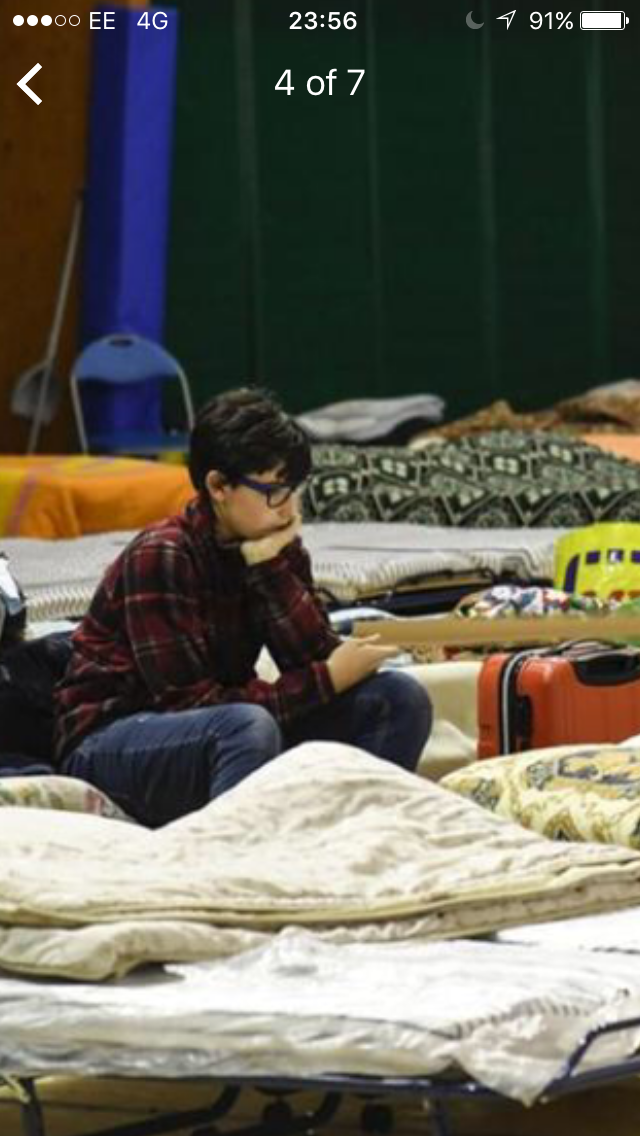
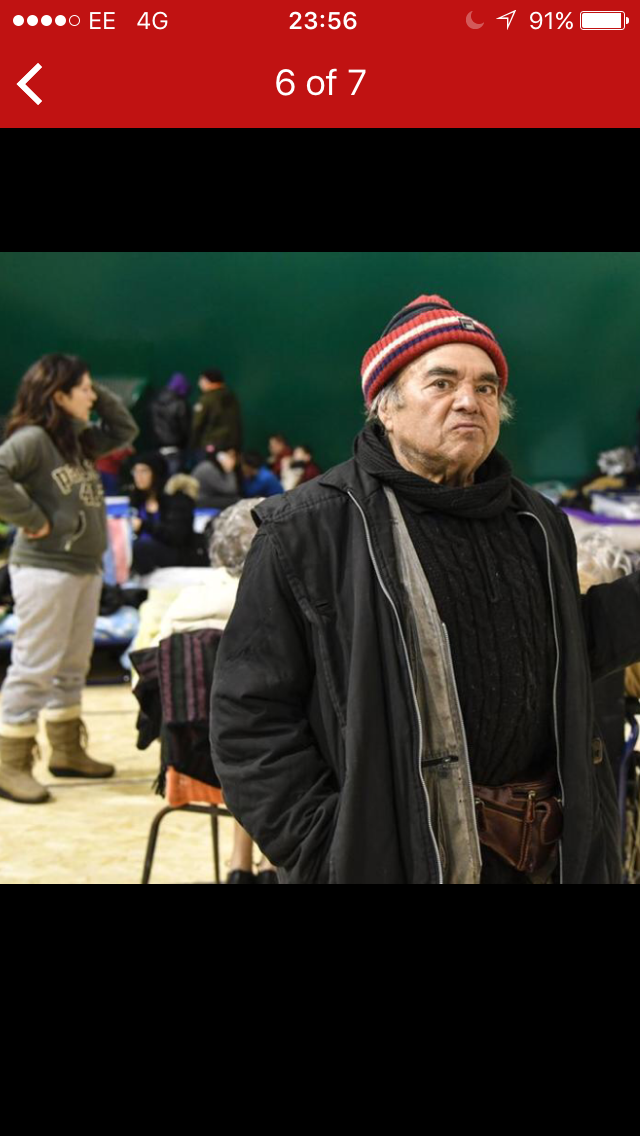
If there was any comfort to be drawn from the news, it was in seeing the speed at which accommodation was found for the homeless: those AFP photos of the people bedding down in a giant tent in Abruzzo. Italy clearly knows what to do. Just heartbreaking that it has to do it do often now…









 patrickgjackson