No connection to my employer, BBC News
On Mallorca, in the space of a few hours, your head can swim from the flavours of a bun in a sun-dappled working man’s cafe and your stomach shrink with primeval horror at the top of a windswept hill.
Simple things like these make it the most extraordinary holiday destination.
Others will tell you, quite rightly, about the Spanish island’s beaches, hotels and restaurants in summer but I, who have only ever known it in winter, always on a tight budget, like it well enough for other things.
Let me take you to Alaró, a small country town with a famous castle about 30km (20 miles) inland from the capital, Palma, on the coast.
To be fair, you are making your anabasis on not just any day but the Feast of St Anthony the Hermit, Mallorca’s annual bid to upstage Halloween. The hermit is revered for taking on devils in a cave. On his feast day, demon re-enactors run wild across the island while saintly Mallorcans gather and groove into the night around bonfires in the streets, feasting on roasted meat, fraternising with horned and hairy devils.
The magic bus
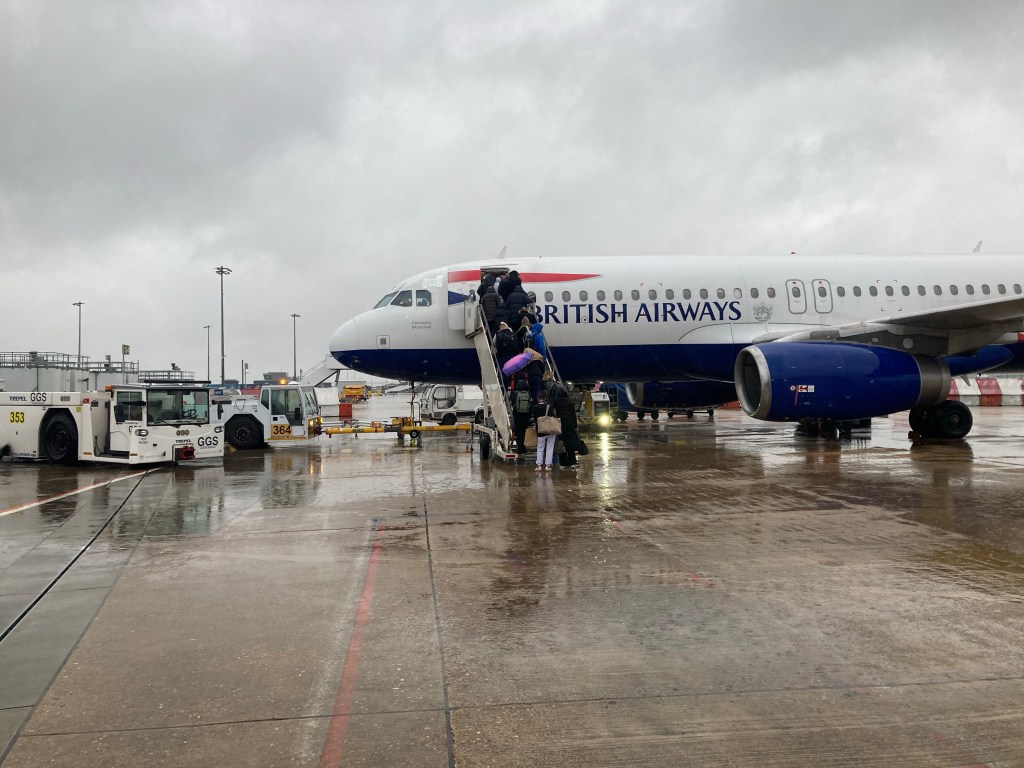
So it is the 16th of January 2026 and you are just off a plane from London on vacation, waking in a rental flat in Palma, head still full of home, heart open to new impressions.
It is the only day forecast to be warm and dry and calm on Mallorca, in a week of cold rain and wind, as western Europe hurries through the wettest winter it has felt on its neck for years.
Beyond the windows of the flat fly other planes, going all ways, gleaming white in a sky as beckoning and blue as in a poem by Verlaine.
On a good holiday, every detail registers.
You head out over innumerable short pedestrian crossings, neat like tiny bridges in Japanese gardens, winding their way out of the back streets where you’re staying up to a real bridge which cranes across a roaring motorway, past a vast shopping mall. A bridge with a ramped embankment worthy of Vauban. As traffic thunders and money courses, some people stop upon the pavement, gathering some like hoopoes, some like pigeons, by the bus stop.
The ride is free to everyone but you, the foreigner, who must pay two euros in cash. Small notes are accepted but it is preferable to pay with cash, coins as hard as Frankfurt on the Main on a cold night when you’re down and out.
A hiss of brakes released and the great bark of the city bus slips off across the Styx of Palma’s suburbs.
Giddy with speed, high on sunshine, wondering where the bus will go next, you meander through suburban industrial estates, and reclaimed fields as flat as pop-up books snapped shut.
On a corner, another bus shelter. Brown hens scatter in excitement over dust like tiny selfie-takers hitting chicken town.
A woman’s hands
Over the sand-yellow streets of the inner city, glowing in the sun, a lovely illusion of summer reigns.
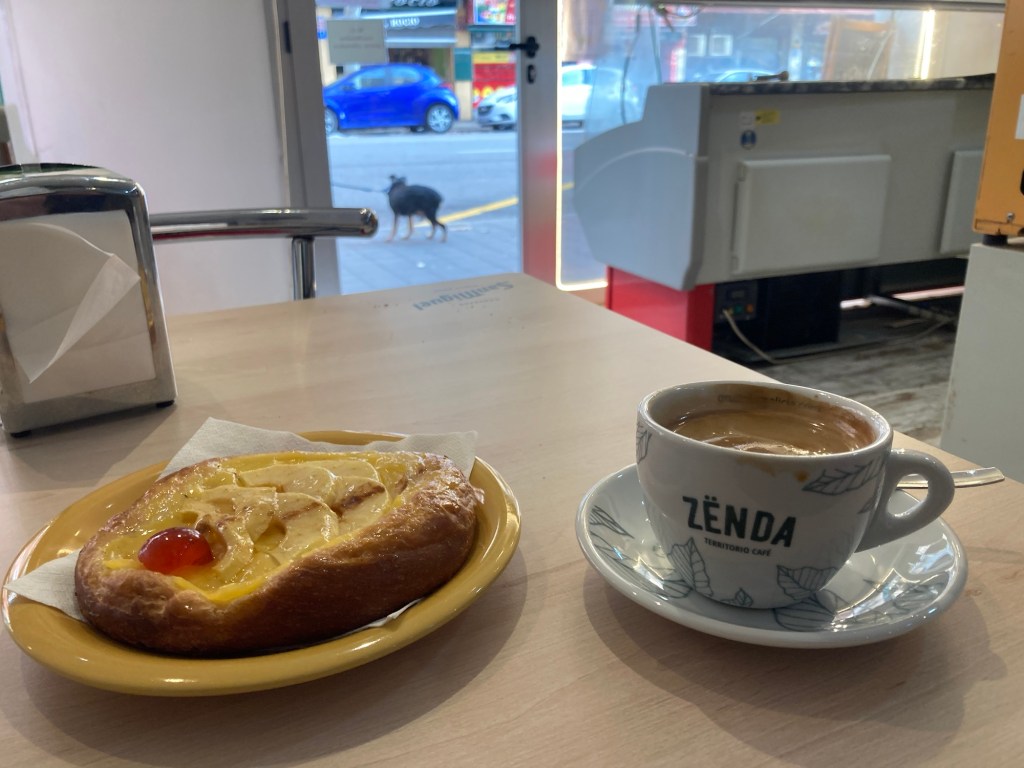
In a tiny cafe a cup of coffee appears on the table from the hard-working hands of the motherly owner, while an old man does his best with a mop to help her, just as she does her best to help him.
A delivery man, scrawny, dusty, polite, downs an espresso at the counter and leaves again with a tiny bun dropped into the well of a paper bag.
The pastry that comes with your own coffee is as tender as petals, brushed with custard, topped with apple and a cherry as red as Christmas.
Food for the road means a whole meat pie and a shortbread biscuit baked in the shape of a gleaming, dusted star.
On the counter, a coin rings, dropping into a tinselled tin marked with the enchanting Spanish word propinas. “Tips.”
Notes from the underworld
You walk to the plaza above the great sunken railway station.
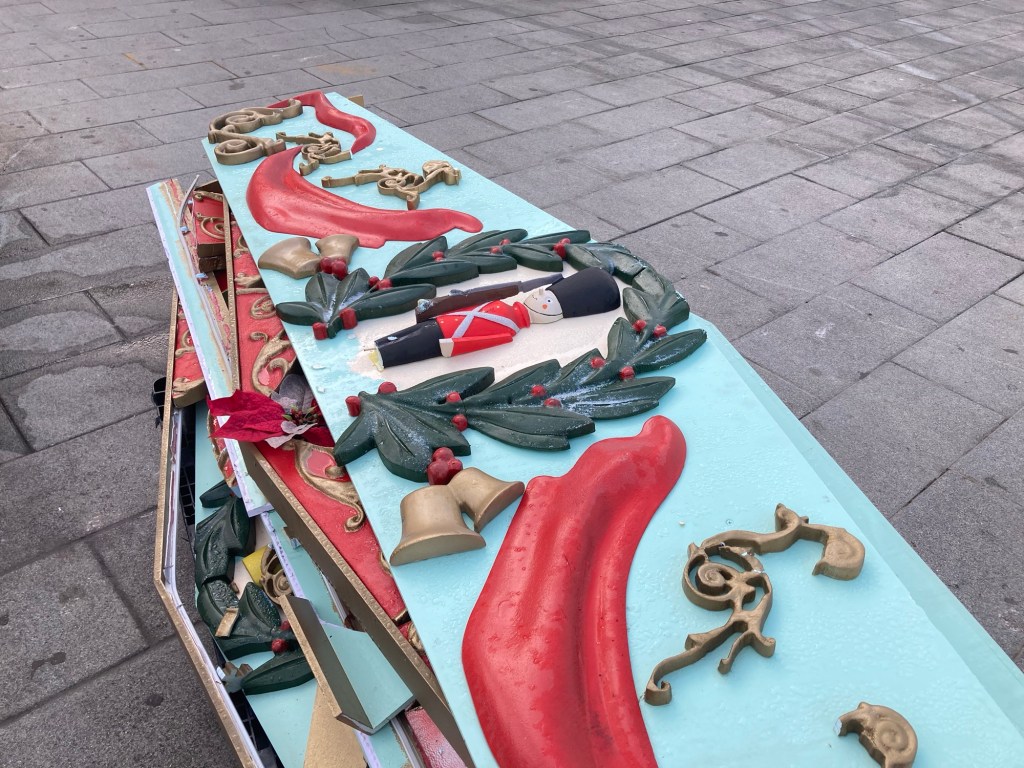
A painted panel from a disassembled Christmas kiosk lies stacked like a coffin lid complete with a Nutcracker, eyes forward, awaiting the toy funeral.
Down in the underworld that is Palma’s Intermodal Station, a little train half-fills with souls.
Persephone herself appears, grown at last out of girlhood into a perfectly happy and perfectly dressed old woman, as tiny and lithe as a salamander, here to hold court in rapid merry Spanish to her friends on a seat while the carriage follows respectfully. We are all in her train.
Daylight bursts in all around as we leave Hades at last, speeding north out of the great railway tunnel towards the centre of the island and fruit and flowers and hideaways, deep inland, far from the incursions of the sea.
The passenger
On the empty road outside the country station the first face of January wears a cautious smile.
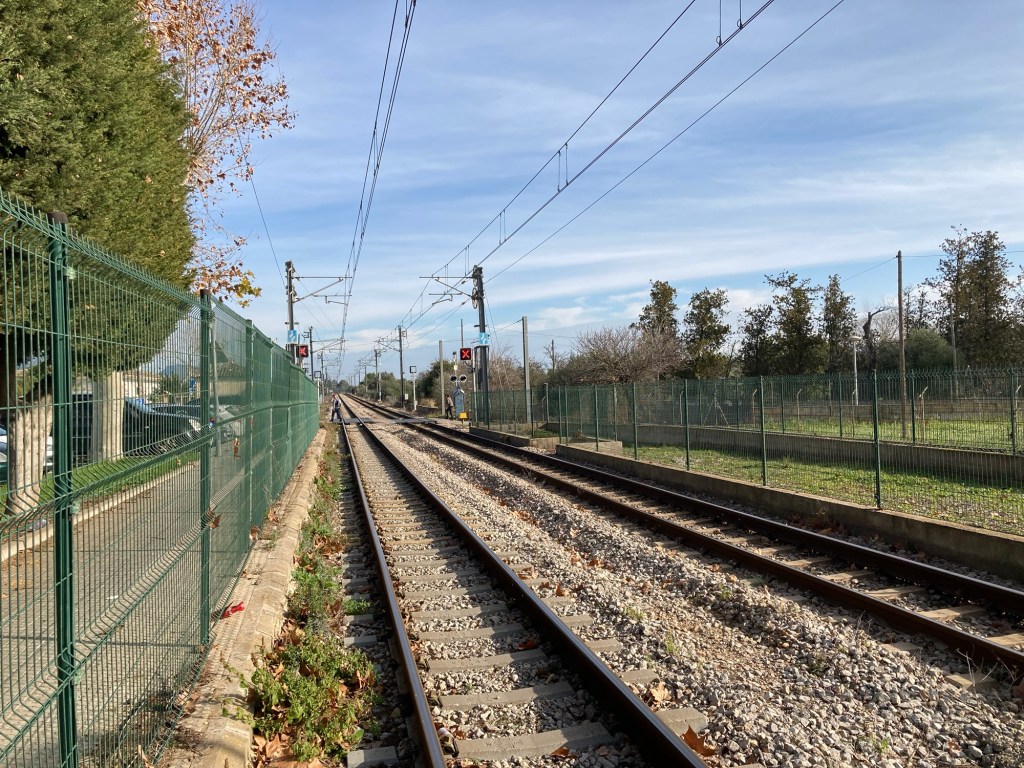
Janus has taken the form of a small, discreet old man, in neat dark clothes, strolling to and fro, passing the long wait for the bus into town with the patience appropriate to the god of time.
In excellent English, he names the distant mountain peaks we are looking at and explains how, under the dictatorship, a race called the Americans built a radar station on Puig Major, the highest of them, in the 1950s.
His English was learnt as a hobby, with a smartphone, but he has never chatted to a foreign mortal before. In his latest incarnation, he is from an old Mallorcan family. His eyes light up as he points out carob trees and talks of glory days for the fruit trade when the island’s produce filled markets along the south coast of France.
He tells how the island’s population has changed, from the Moroccans who first came to work on the farms, to the British and Germans who pay to live in the sun, and the Colombians who now look after them. As the time for the bus to arrive approaches, other men and women appear and it is nearly full when it leaves for the town. “Nobody else on this bus is from Alaró,” says Janus quietly.
The second face of January is a friendly farewell grin before the god of time melts into the crowd on a pavement in the town.
Baked in Hell
Five sweet, papery mandarin oranges from a corner shop, are bought for scrupulously counted cents, not euros, from the South Asian shopkeeper at the till whose wall is a shrine of unframed photos of himself and his friends, here on the edge of the Western world.
In the street a chapter of demons marches to the rattle of drums.
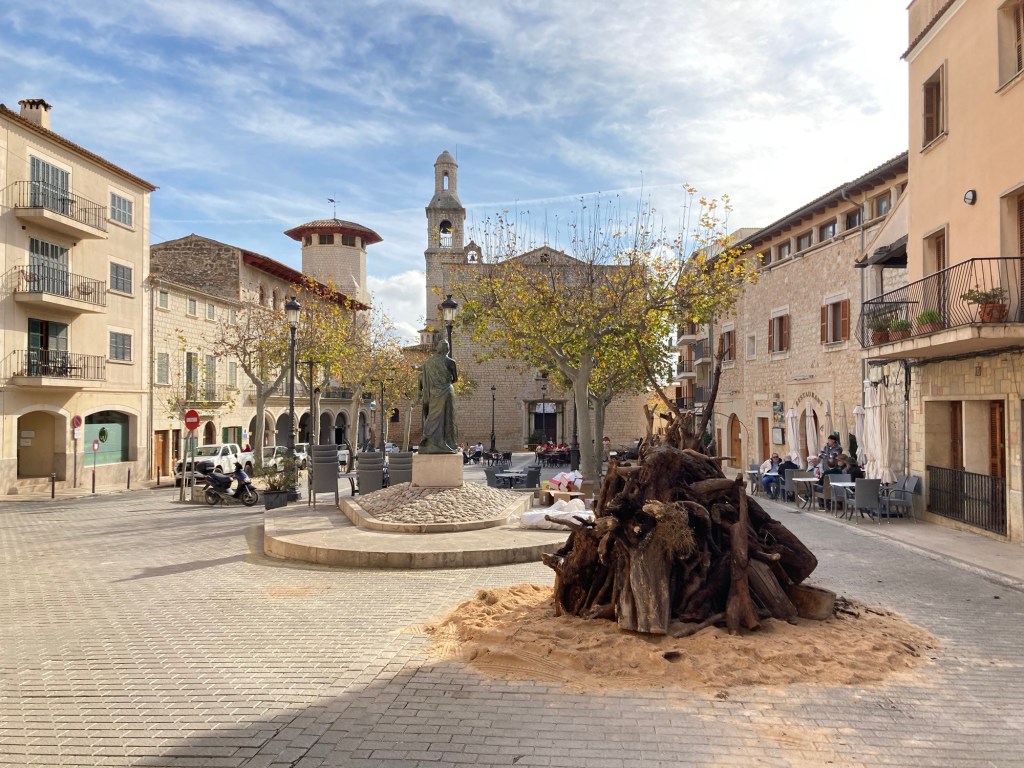
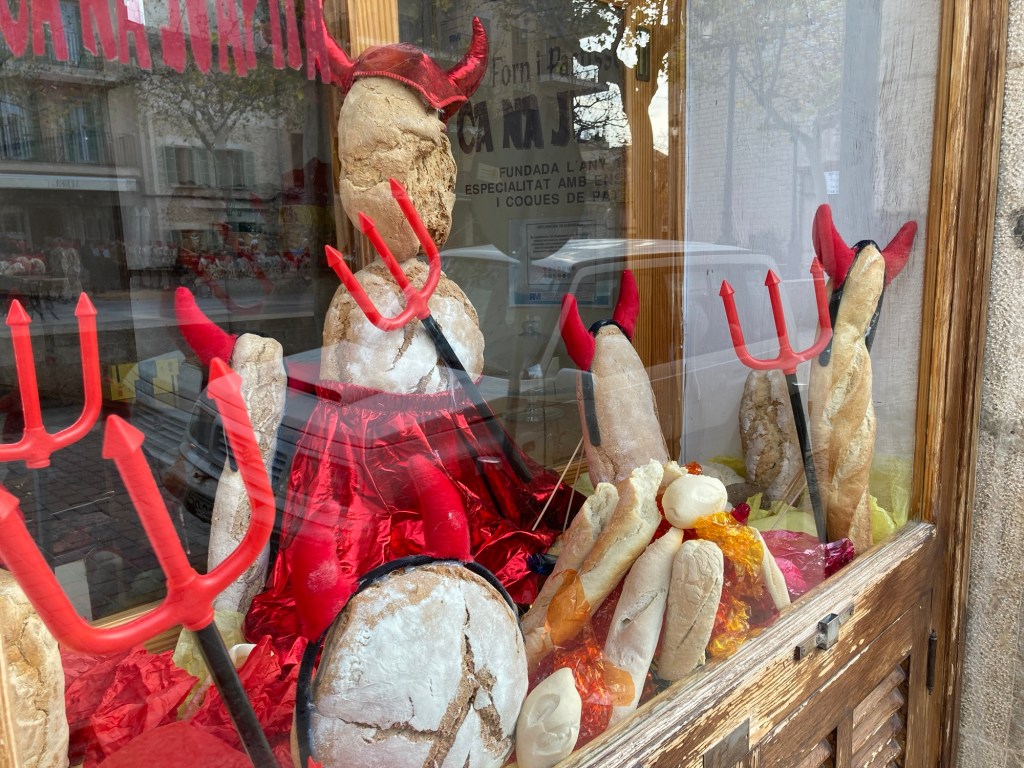
Nearly noon and bonfire logs stand ready in the sun on a neat mound of sand in the main square, as demons break for drinks at cafe tables. Diabolical loaves in plastic red horns fill the window of a bakery. Fun is coming to the town as sure as the echo of a drum.
The ascent
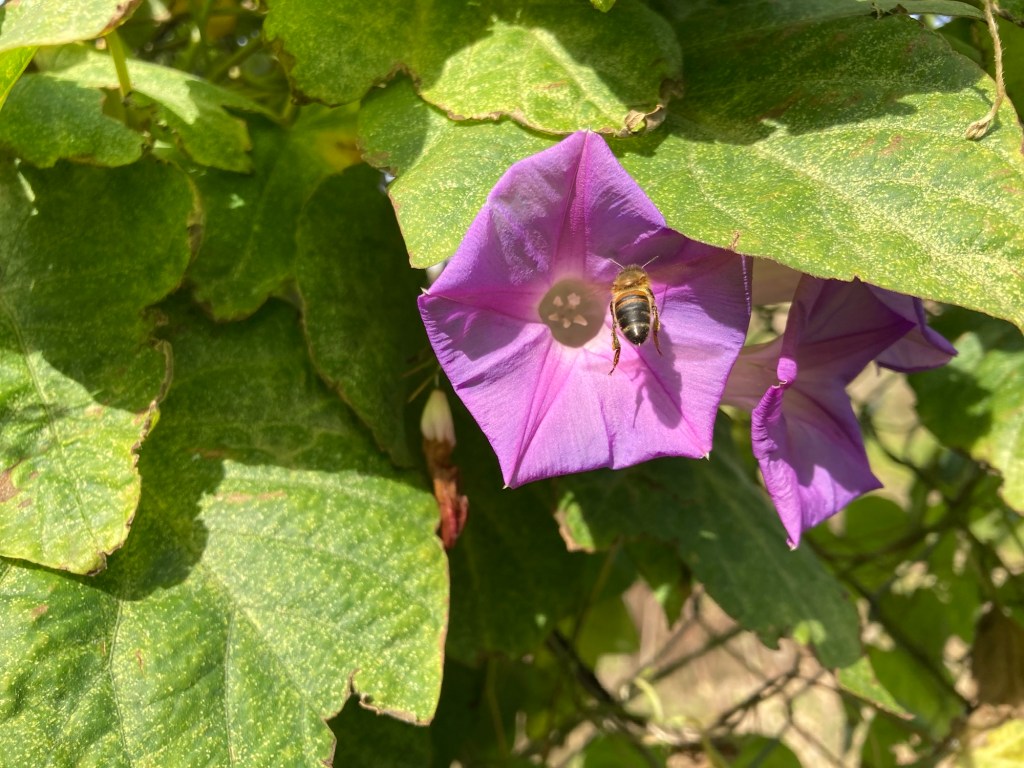
The path to the castle follows a serenely empty street, past some wasteland where a bee working in a purple flower is the only sign of life as the day slips past noon.
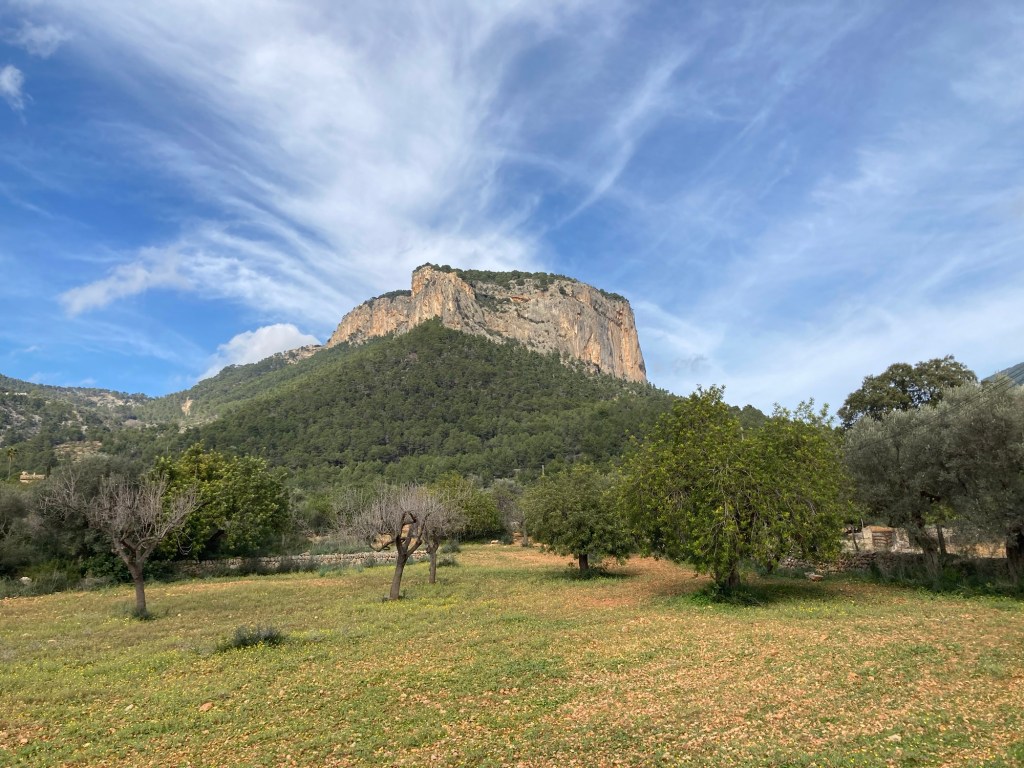
When the town drops away, a hill looms into view, its inscrutable rock face shining like metal above the fields, as remote as ancient history.
When your own feet eventually move the pebbles on the path to the castle, you are on a walk that began more than 1,200 years ago, to the place where two civilisations ended on the island: early Christianity and Islam.
History has buried the swords and scimitars but the hill, towering over the plains with its sheer cliffs like the steel helmet of a knight, mysterious and sinister, is going nowhere but your imagination.
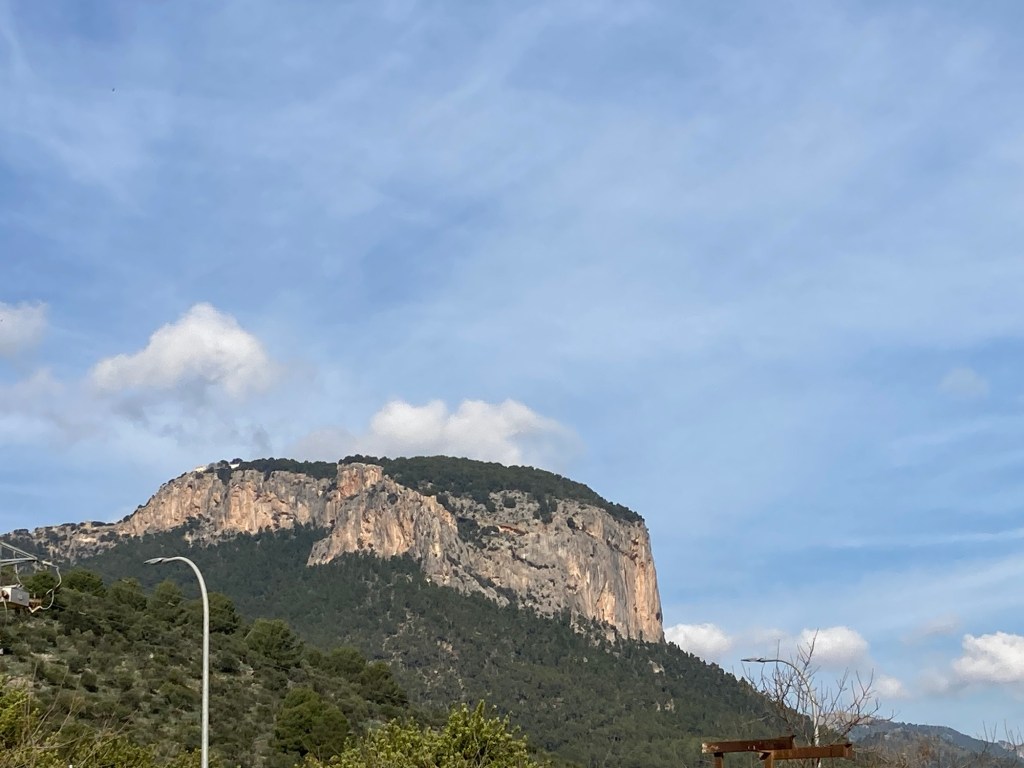
Hardly a car passes on the long straight road past the farmland to the slopes, when it starts to zigzag upward like a snake around woodland and rocks.
Pairs of hikers, happy to be descending, shout hello in passing. “You’re only halfway there, you know?” one man gleefully says in Spanish, German accent pushing through. “Take it easy!”
As the road steepens, a recent car wreck appears far below, gleaming deep among the trees where it came to rest after coming off the road.
The scent of pine and smell of rock envelop the track to the top, a path an ascending Moorish or Catalan soldier from earlier centuries would doubtless recognise, and doubtless curse all over again.
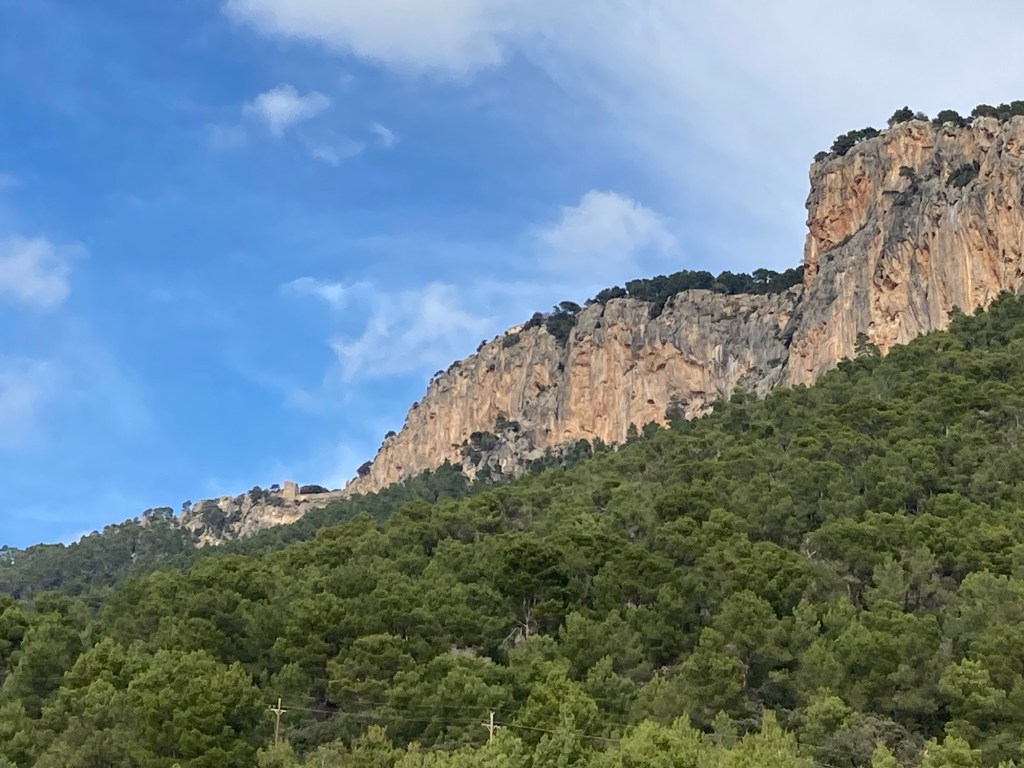
Refuge
Three thousand kilometres to the east on this January day in 2026 blood stains the snowy ground of Donetsk as the East Slavs fight for their future but here in the Mediterranean, on the slope of this sunny hill, drying in the sun, all is as quiet as peace and forgotten history.
At the castle above, at the beginning of the tenth century, invading Moorish forces overcame Byzantine Christian holdouts after a siege lasting eight years, completing the Islamic conquest of Mallorca.
More than 300 years later, in 1231, the forces of James I of Aragon came here in turn to crush the Muslims’ final resistance to the Christian reconquest of the island.
As the narrow track reaches the first gate in the castle wall, you turn and see the plains stretching out below, away to the sea that once brought invaders flooding inland.
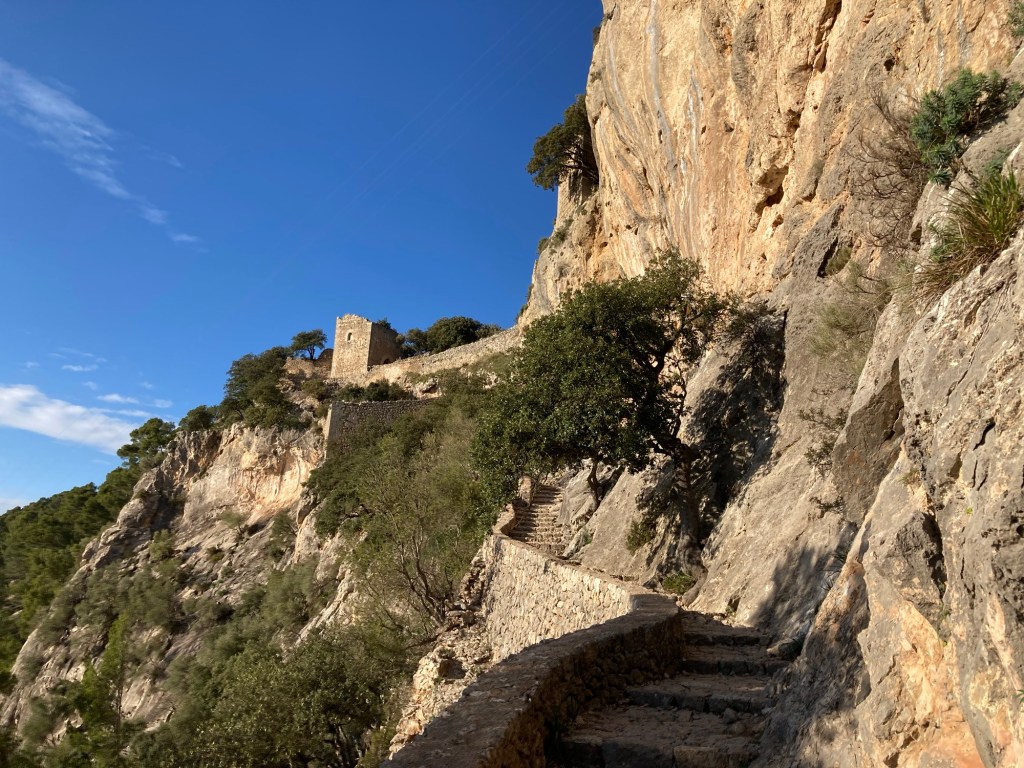
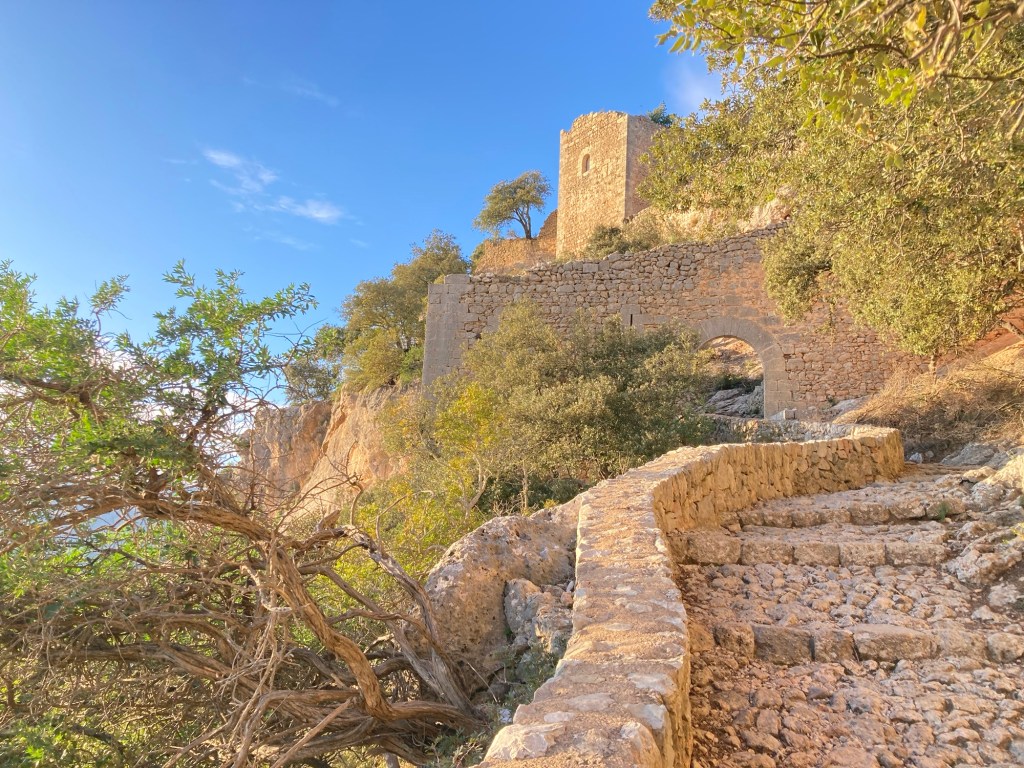
Misery grips your heart as you feel the great fear that once stalked this coveted island again and again, over the centuries.
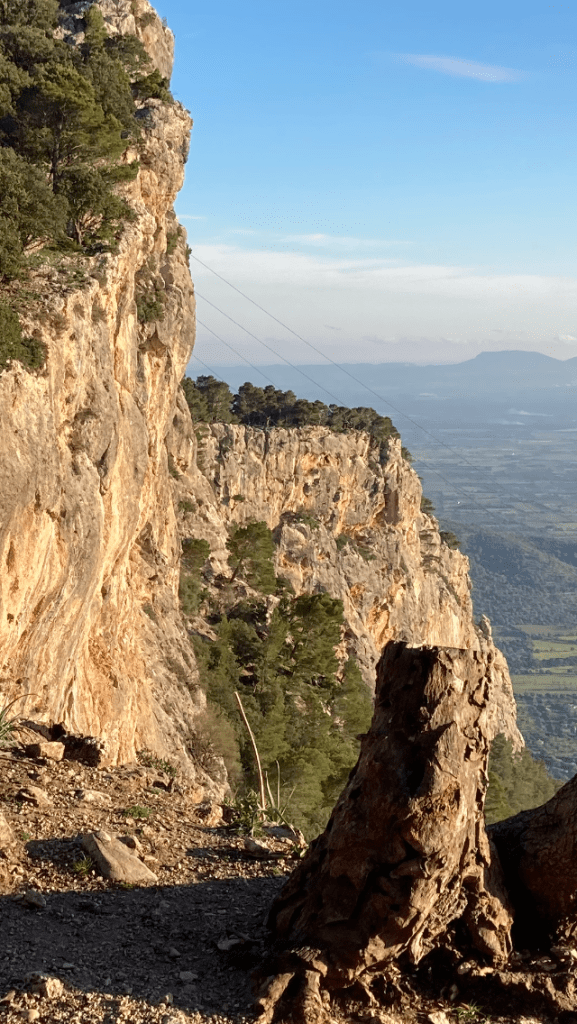
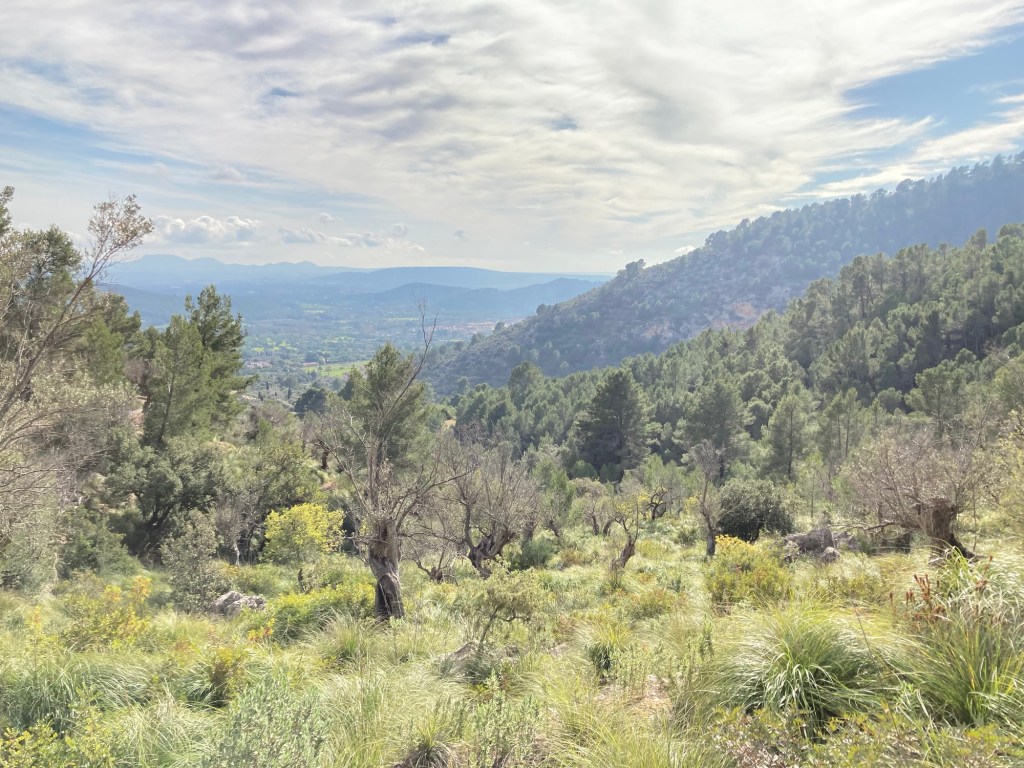
Alaró’s rock castle was where the desperate went to shelter in time of war when there was nowhere else to turn.
Two great birds wheel through the sky above the castle wall today. Innocent of human ugliness, they still look remote and murderous, for all the world like drones hunting men and women. Yesterday’s safe places were castles. Today’s are down there, across the sea, under the ground in bunkers and tunnels and metro stations. Above is now below. When armies bury themselves, all is gone to Hell in the world of war.
On top of the world
Nobody has time to care about such things when they are in love like the young couple exploring the castle grounds at the top of the hill.
They peek over the crest down at the steer drop, gaze across to the mountains, run here and there to pose for photos of their happy time together.
Tiny at this distance, the dome of the radar station on Puig Major looks no different to any observatory built to study stars, not track the satellites and missiles of the Soviets.
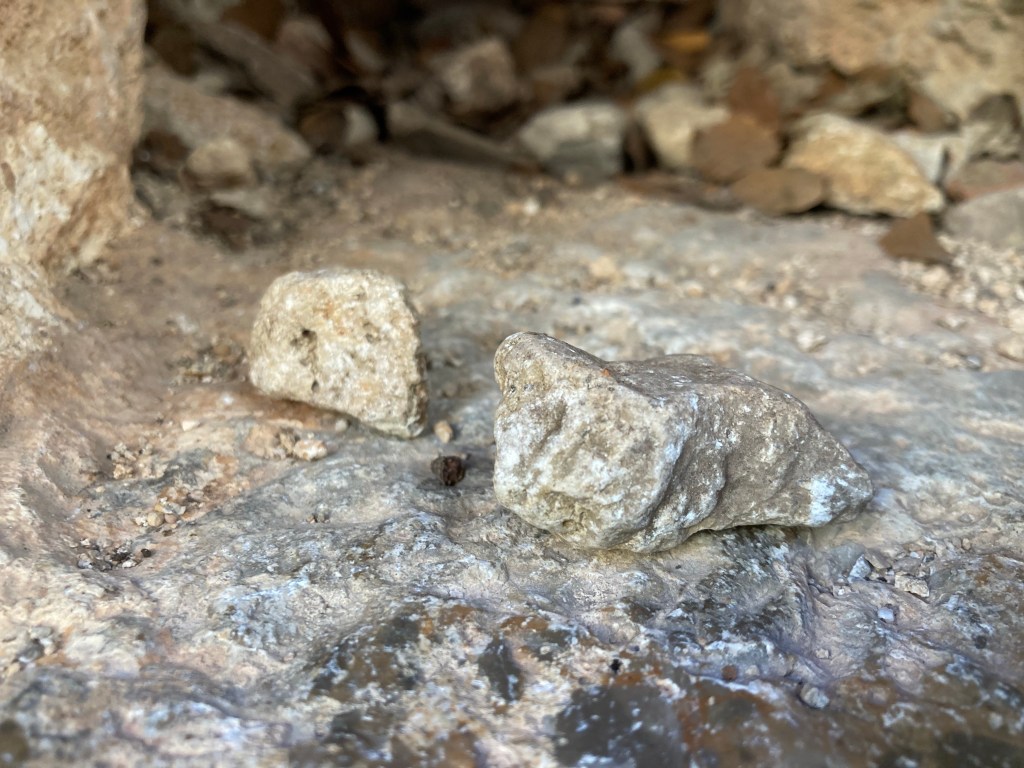
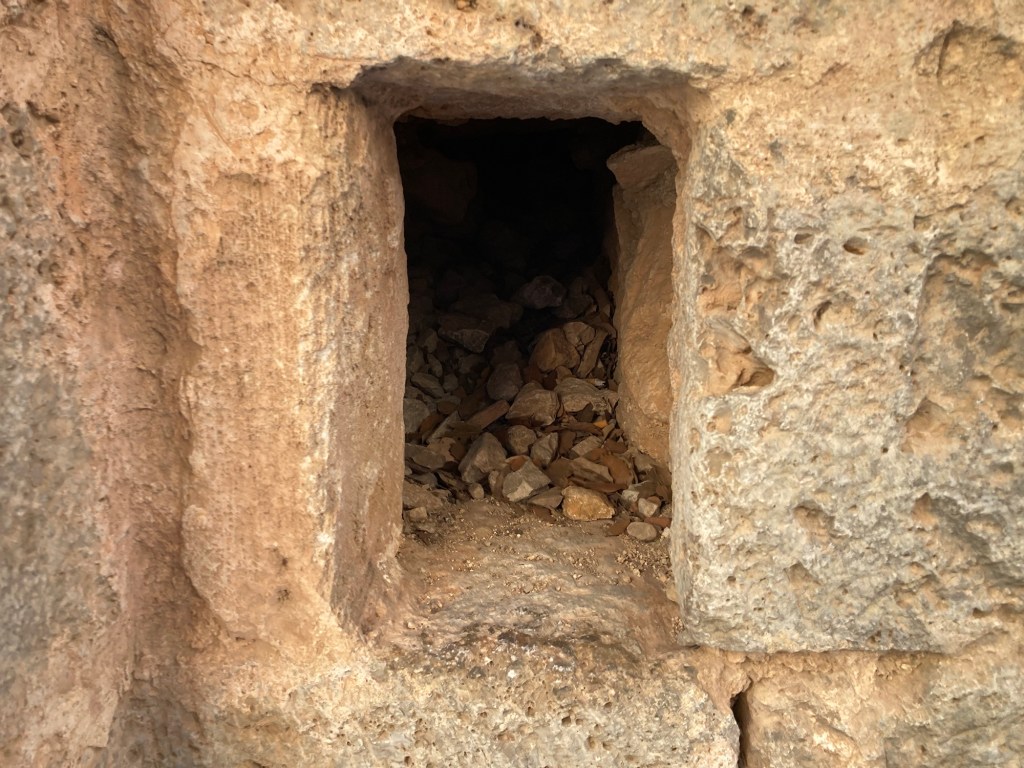
In a niche in the gateway lie pebbles.
On your way down, you add two from the path, the hiker’s way of marking his or her passage. One from you, one from an absent friend.
The happy plains
Downward is easy but the daylight is draining from the sky. By the time you are on the plains again it is dark night and your head torch is leading the way along the road.
Eight white dots appear around a corner and you find yourself being examined by a gang of bemused cats sitting on a ditch. You leave them to their secret symposium and tramp on.
Even the main road into the darkened town has barely a car on it coming up to seven o’clock. A red haze cloaks the centre of Alaró and the air carries the smell of gunpowder after fireworks and the rhythmic beat of music. It is the feasting of the feast day at last but you have to get back to the big city and again you go the other way, back to the bus stop for the shuttle to the railway station.
On the crowded train, rakish men, going grey but dressed and groomed for partying, drink beers with their womenfolk, chatting in Spanish and roaring with laughter all the way into Palma.
Bus, train, bus, and back over the motorway bridge and over the Japanese bridges of the pedestrian crossings until the quiet, nondescript street of concrete buildings appears that will take you to your holiday flat.
Outside a workshop with its shutters up, his bearded eagle-like face lit up by the glow from a barbecue, a tall old man expertly roasts meat as he chats to a friend of the same age. Inside, behind them, family groups eat and drink to music.
It is one tiny corner in the great feast going on across this happy shire of an island.
It is just one among thousands of squares of merriment on the patchwork quilt lovingly cast across Mallorca tonight, the island safe and happy in the hungry sea.
 patrickgjackson