Private piece, no connection to my employer
Warning: Contains images some may find distressing.
Get off the motorway to Poland, out of the stream of towering goods lorries thundering east on one of modern Europe’s greatest trade routes. Pull up in the quiet of Frankfurt on the Oder, birthplace of Heinrich von Kleist, and think yourself back nearly 500 years into his novel Michael Kohlhaas as you walk over Brandenburg ground…
You know you are right and you will have justice. You are a model citizen, a successful and honest businessman, a father, a proud husband. You flourished in trade, following the rules in a state of law, here at the heart of Europe. Then your rights were trampled on arbitrarily by an upstart heir of the landed gentry who undermined your business, throwing the weight of his inheritance around, and there was nobody to stand up for you. You were denied justice and now you have decided to obtain it for yourself by force.
To the horror of your wife, you sell up your business and make plans to send her and the children away. You cannot quite say it yet but, faced with tyranny, you are burning your bridges. Soon enough, before you land so much as a blow, the wife you love is struck down herself while trying to stop the disaster now unfolding.
Your servant, mishandled even worse than yourself by your enemy, enters to tell you he was ready to burn down the manor of the tyrant but the sound of a child crying stopped his hand. It is still not too late for you to step back. You let the moment pass. You see no way back from the path to war.
An onslaught follows with iron, fire and sheer, brute, skull-smashing force…
If Kleist wrote one thing that still really clicks with a non-German audience, it is probably this novel. Michael Kohlhaas is the story of a 16th Century horse trader in the state of Brandenburg and the war he wages on neighbouring Saxony. It is the original revenge story, the first horse opera, the Western before its time. In Kleist’s work, the blind pursuit of justice or revenge is a common theme, taken to an even more extreme level in his other story The Foundling – and apparently his plays.
“Apparently” I write, because I have seen barely anything of them in translation – weaponised by the Nazis, plays like The Hermann Battle and Penthesilea fell out of favour after the Second World War. It was my interest in finding them that took me this month to Frankfurt, on the border with Poland, which houses the only museum dedicated to Kleist’s memory. Given that 2027 will mark 250 years since his birth, the time felt right.
In the event, I came away with no recording of a play nor even a book of one, in English or German, just a couple of essays he wrote and a fridge magnet. Yet I was not disappointed for my journey to the playwright’s home city had raised the curtain on the ultimate backdrop to his theme: the fury of war.
This city, which in the Middle Ages could fairly claim to be as important as western Germany’s financial capital Frankfurt-on-the Main, was crushed to rubble and dust by the Soviet Army in the closing months of World War II as it made its way into Berlin to put an end to the Hitler regime.
Coming here 81 years after, you see no wartime destruction other than, perhaps, glimpses in the archive photos exhibited inside the city’s great church of St Mary.
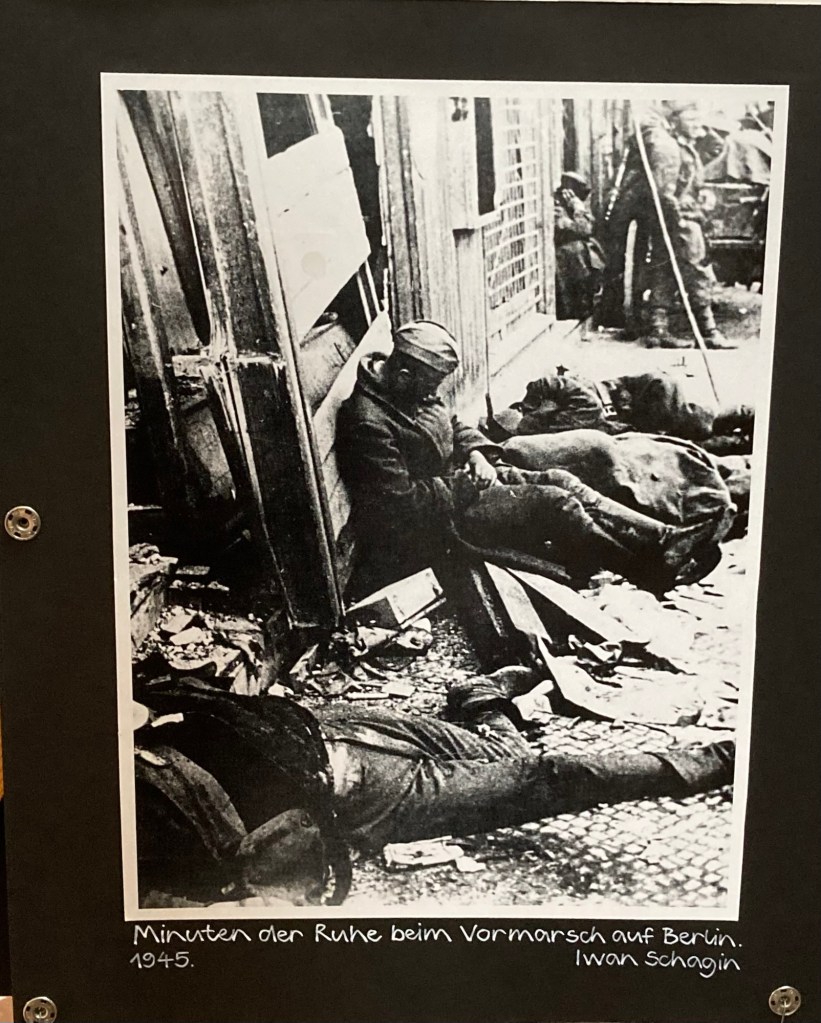
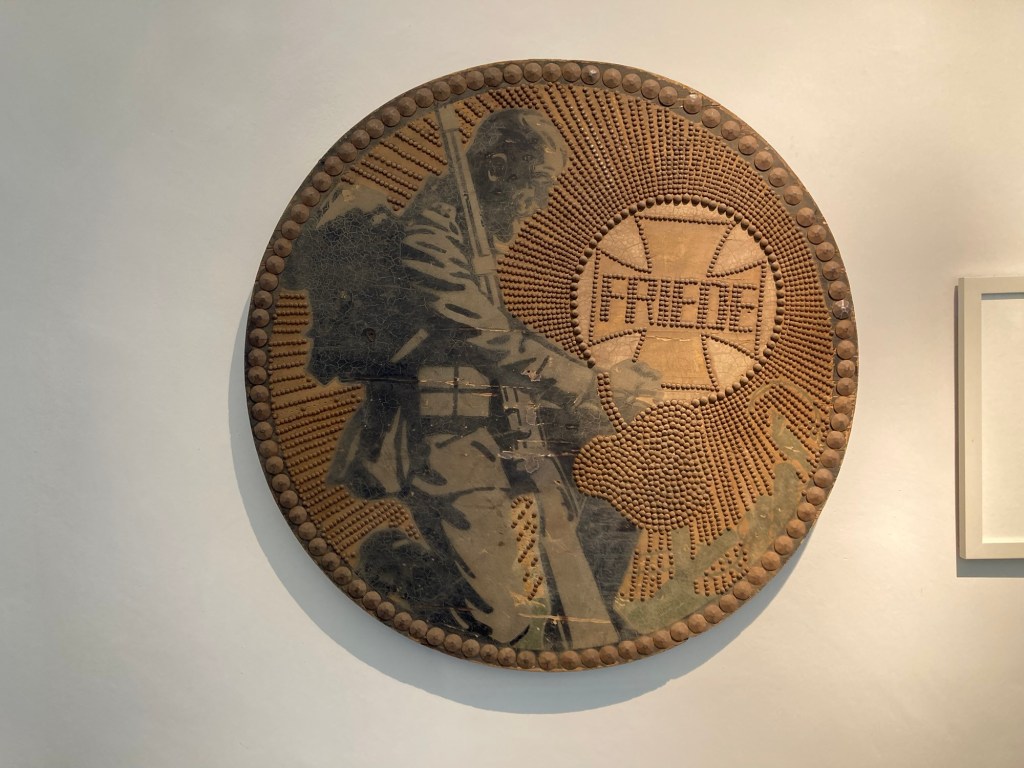
They are part of the Swords Into Ploughshares campaign by local Protestants to end the Russo-Ukrainian war raging just the other side of Poland. They are guided by the post-WW2 German Church slogan “Krieg soll nach Gottes Willen nicht sein” (“War is contrary to the will of God”).
Here a woman with a face like a death mask is being helped along a street by two men, one of whom carries a child on his shoulder. There an exhausted Soviet soldier grabs some rest as he sits on a rubble-strewn pavement in his greatcoat, a few metres from the twisted legs of what appears to be a corpse.
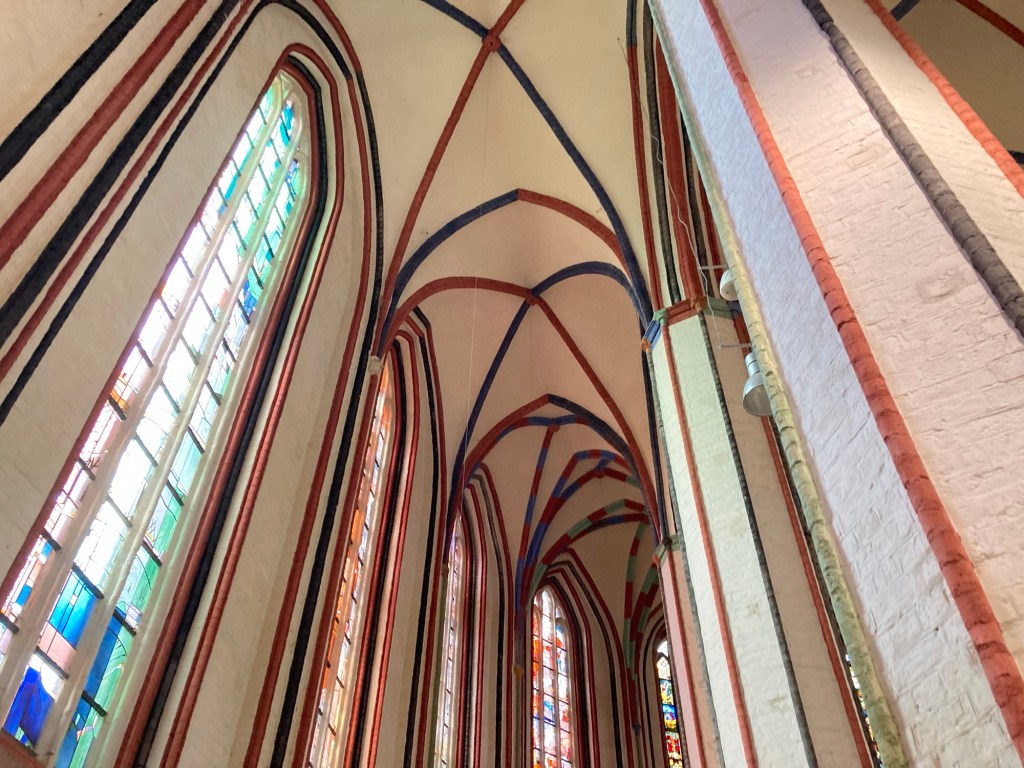
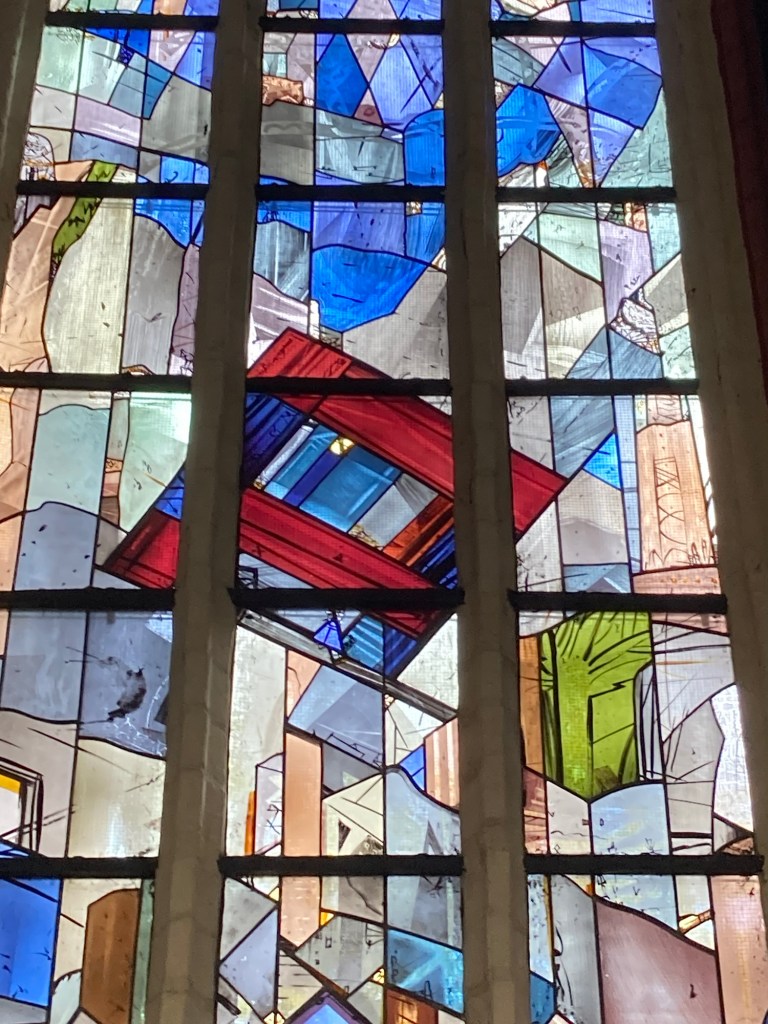
But the proper way to see the war is not down here in the peace of the great church under its new roof with the light streaming through the stained glass windows.
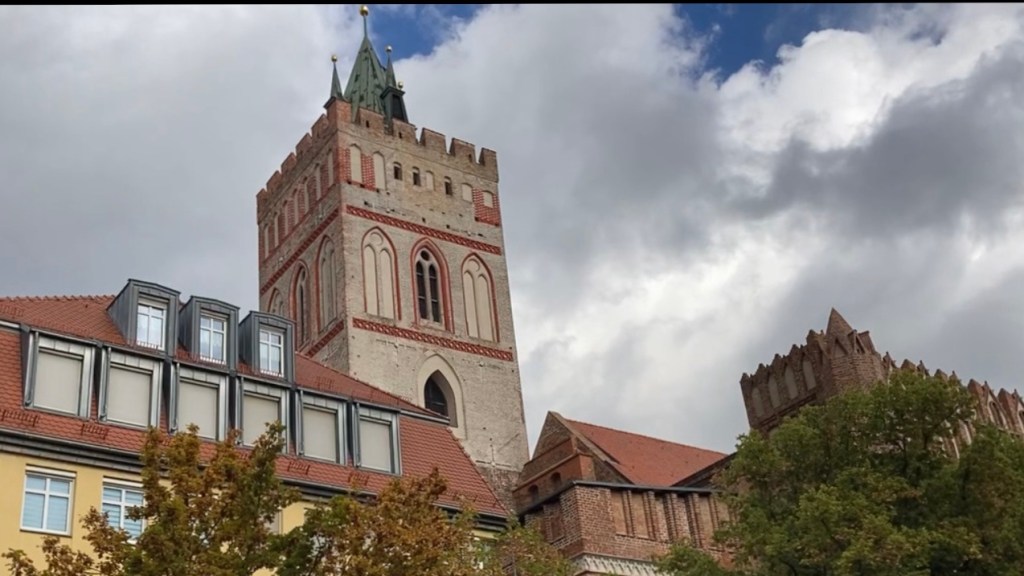
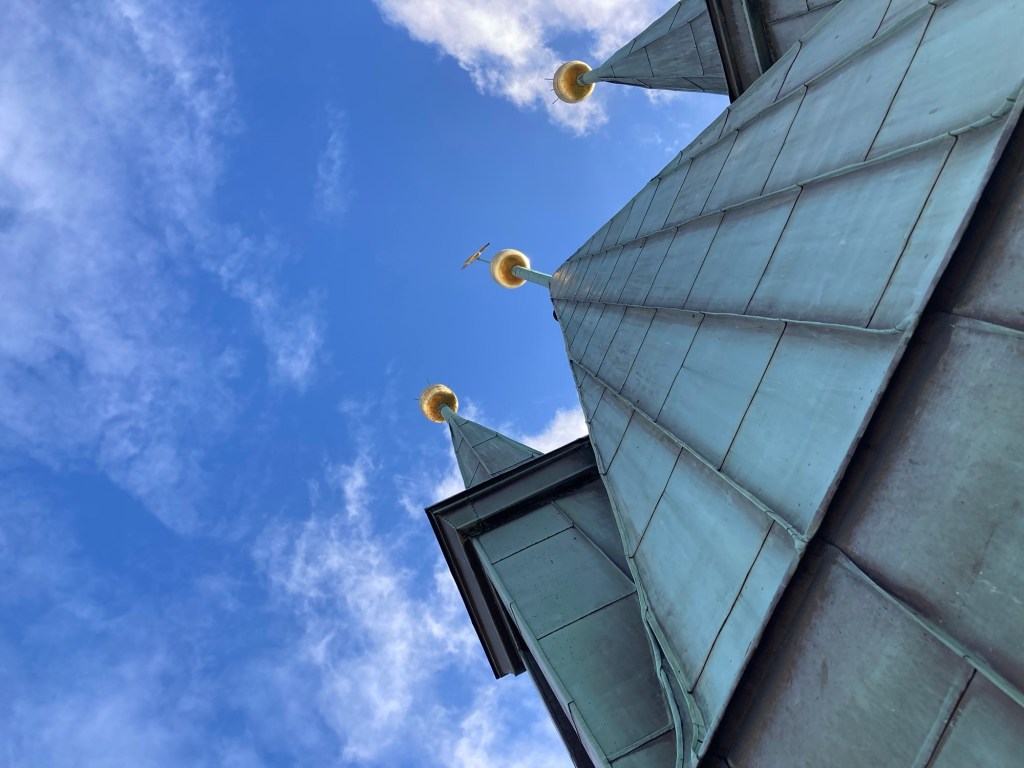
It is up there, at the top of the restored bell tower, where you can stand on the observation deck and gaze out over all of Frankfurt – at the functional modern buildings and large squares with which East Germany filled the space left by the missing city of Kleist.
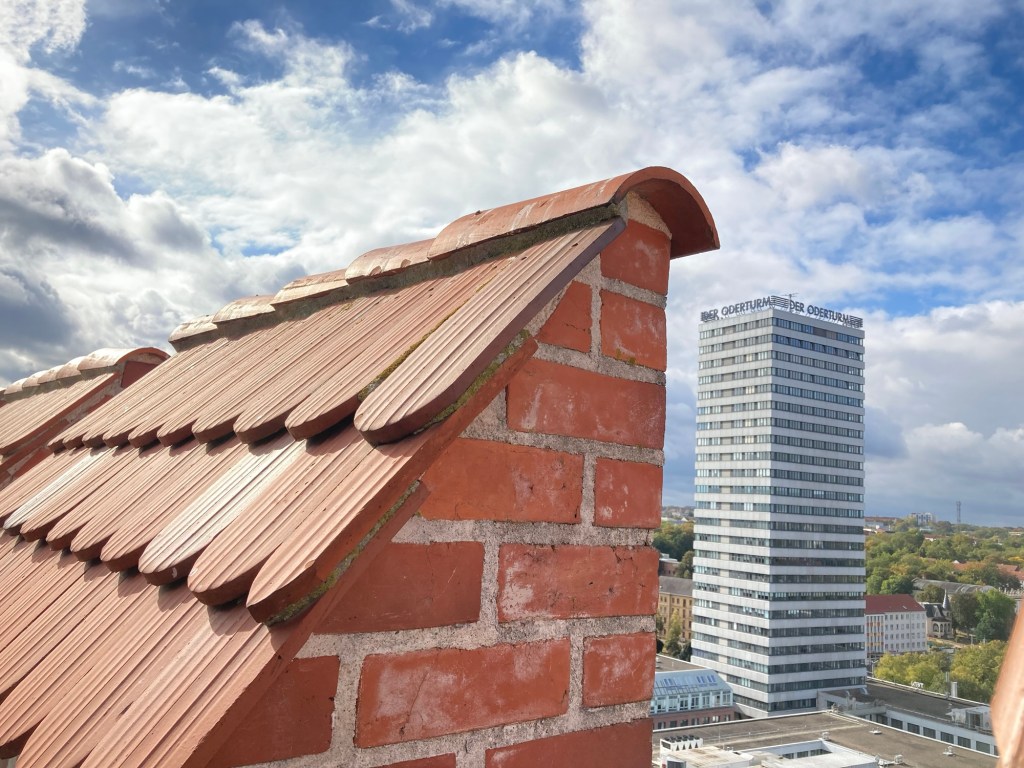
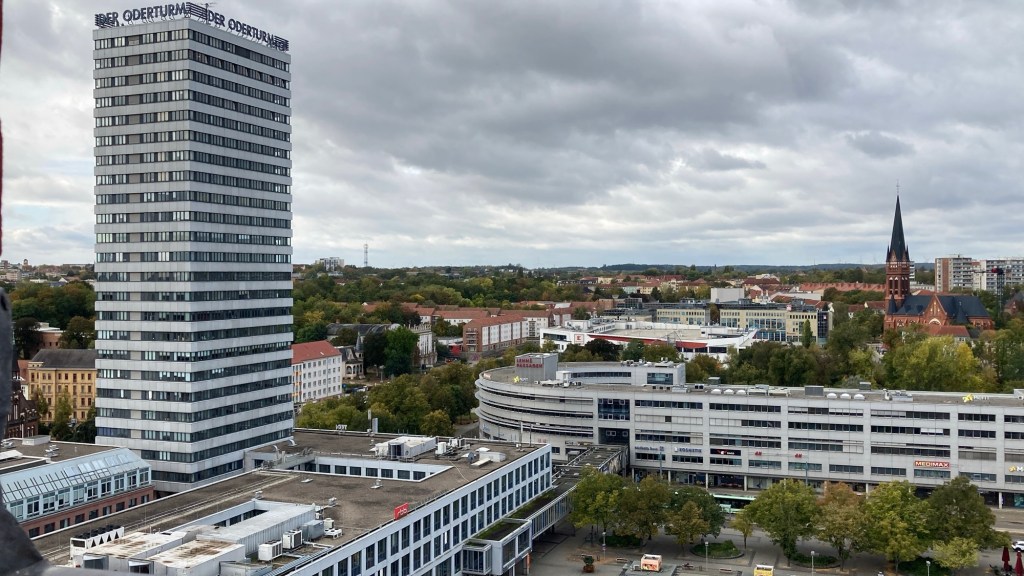
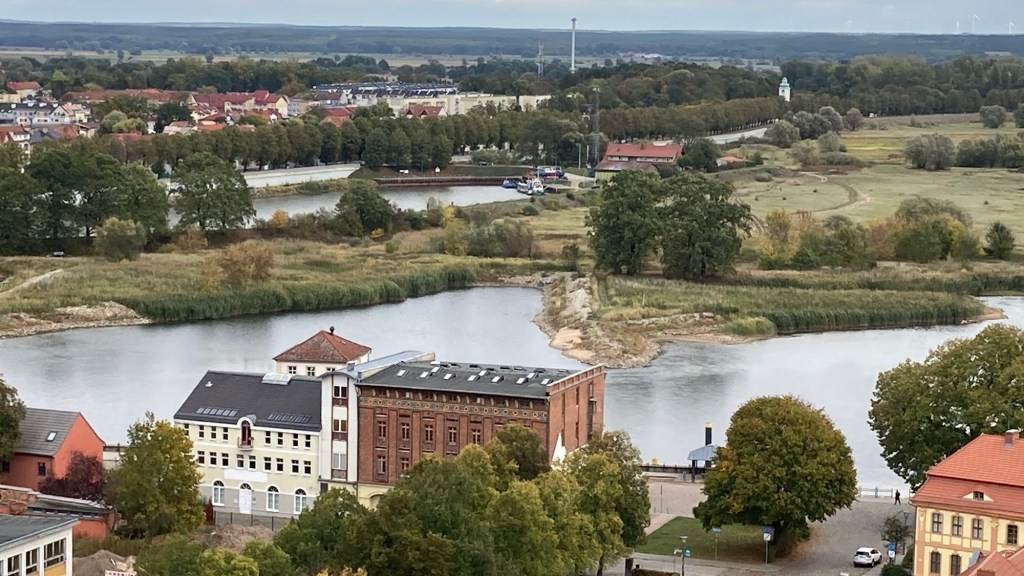
One particularly precious building does remain from that distant past, however. It stands lonely by the river like the lame boy in The Pied Piper of Hamelin who is left behind when all the other children vanish. The Junkerhaus, a little palace where the children of the nobility had their quarters when they studied at the university, somehow survived the war and became the local history museum.
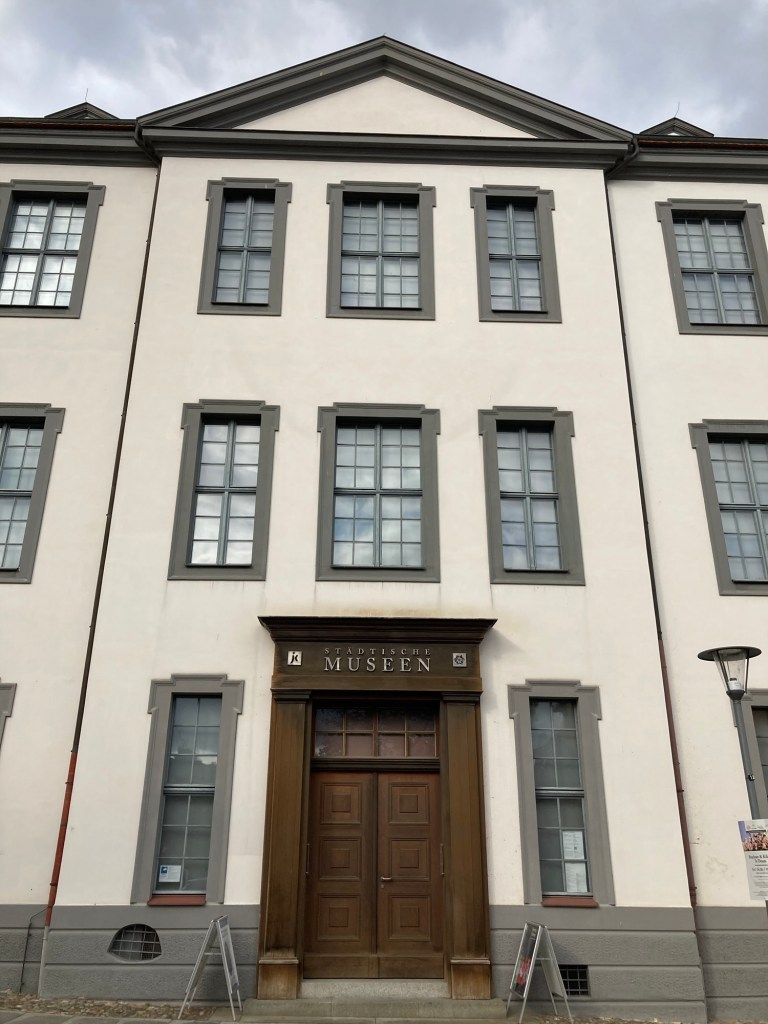
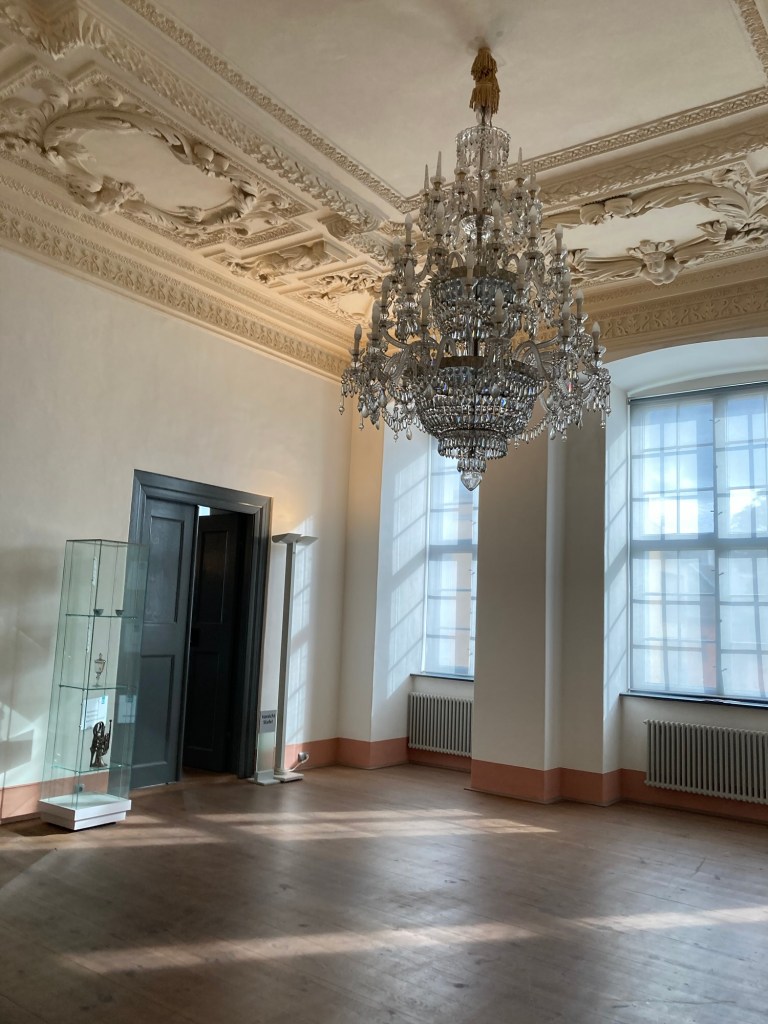
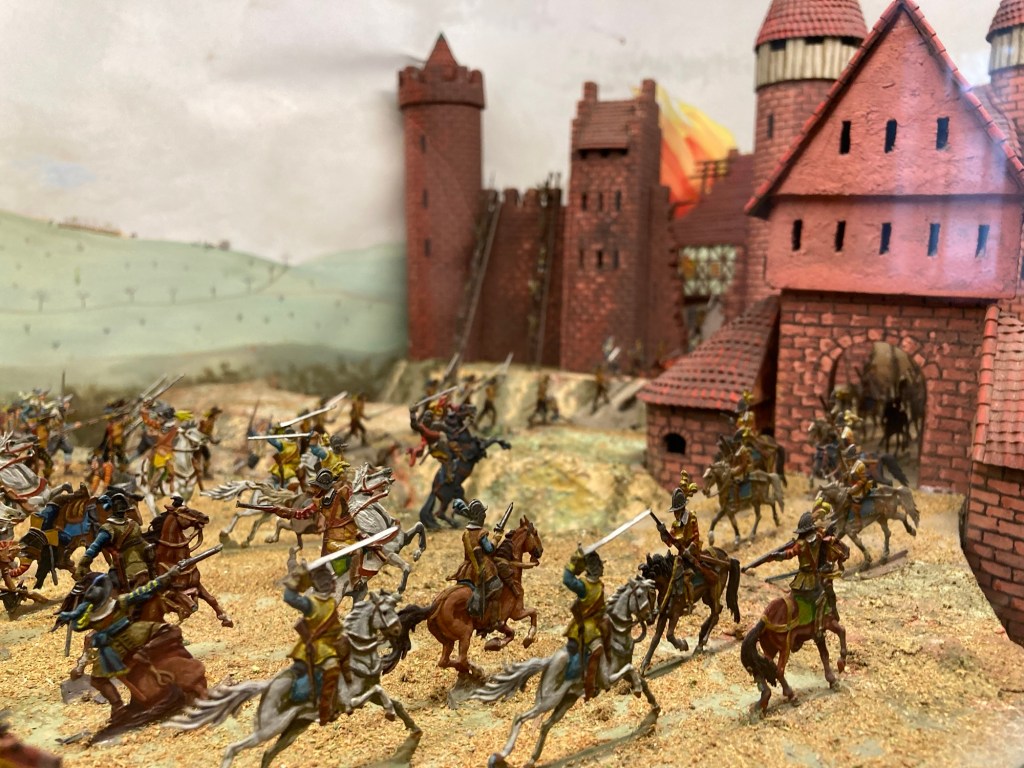
As you explore its small but beautifully curated collection, ascending from floor to floor along the winding staircase, passing under high stuccoed ceilings and chandeliers, you feel yourself spiralling back in time. Lovingly crafted dioramas show Frankfurt at key moments in its history, oil paintings from the early 1900s record the riverside in all its compact cosiness.
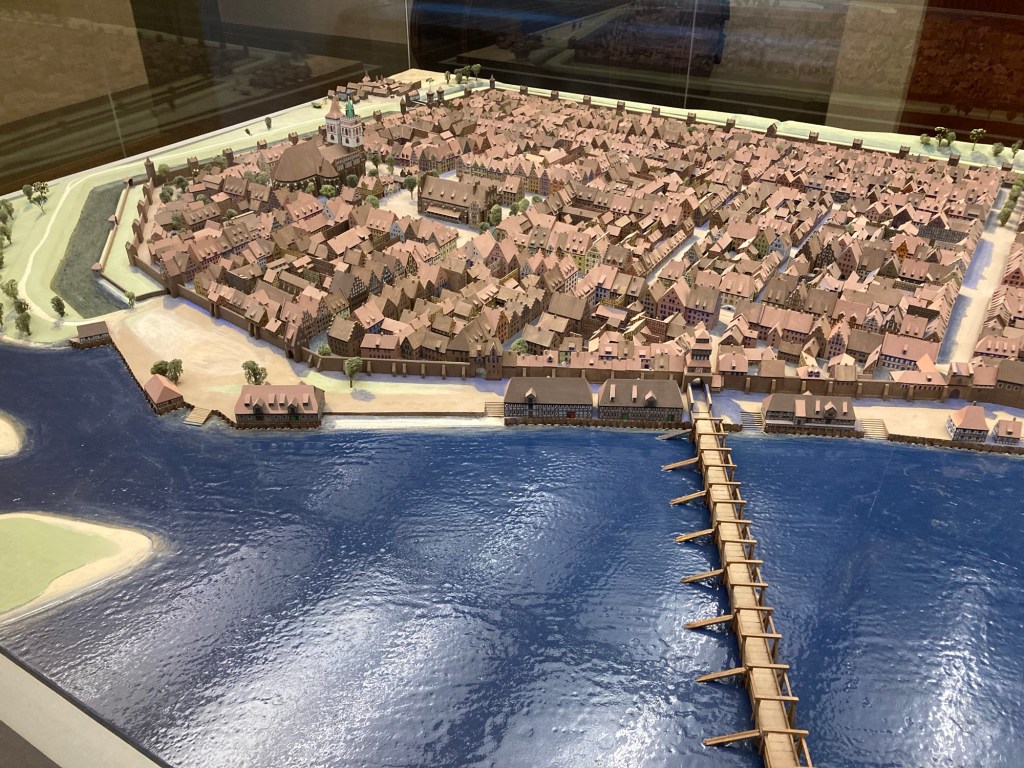
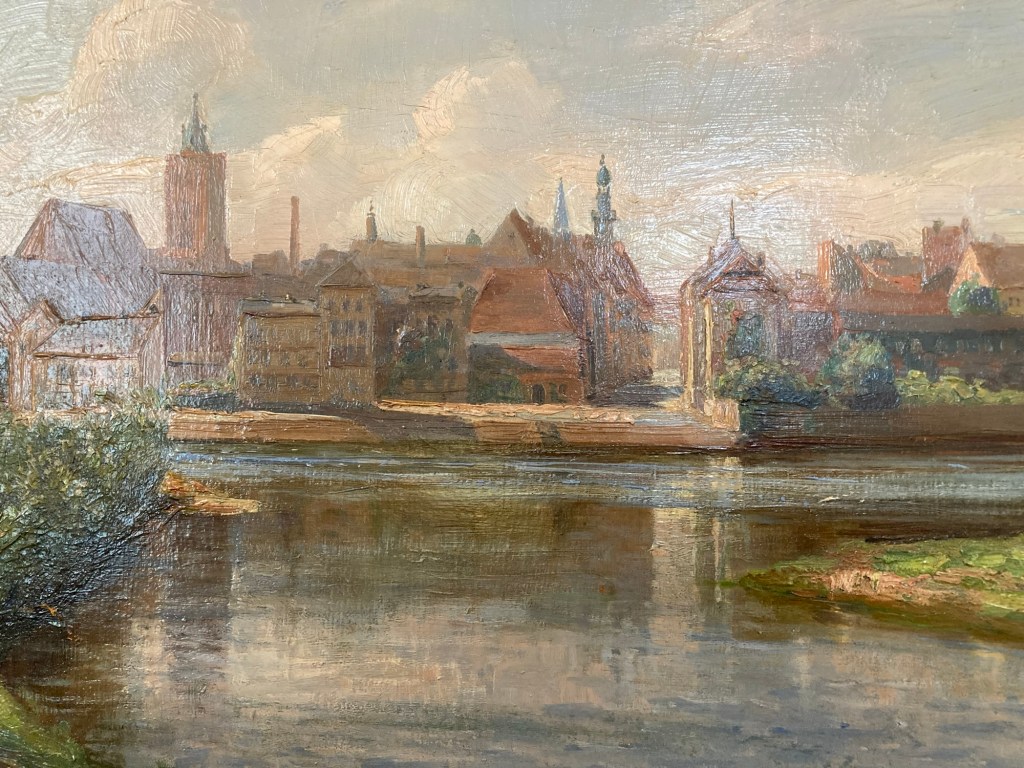
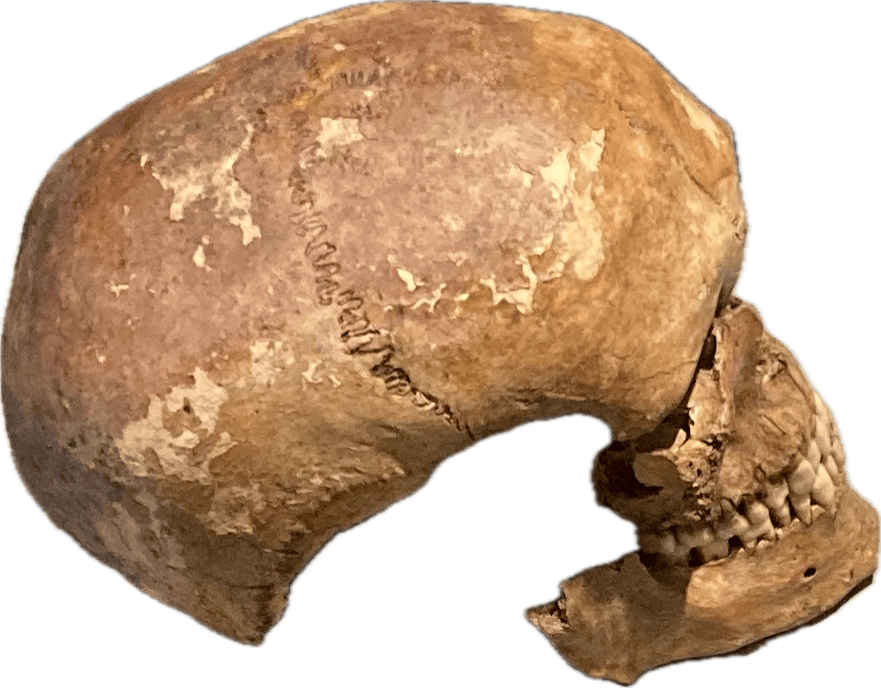
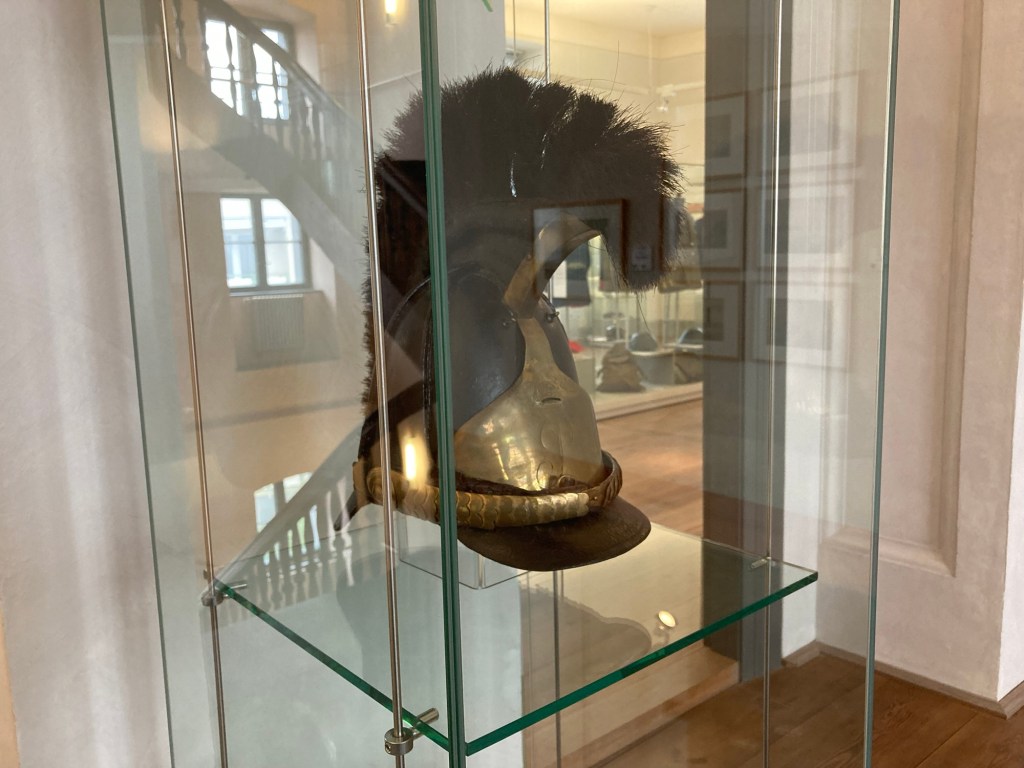
Death is here too, grinning shyly out of a glass box from the skull of a Swedish soldier, lost in the siege of the city during the murderous Thirty Years’ War nearly 400 years ago. His bones lie alongside metal uniform buttons, like so many counters in the board game of European history. He is the only dead man I see on my visit to Frankfurt but I like to think he speaks for all the war dead down the centuries as he poses the obvious question: “Was it really worth it?”
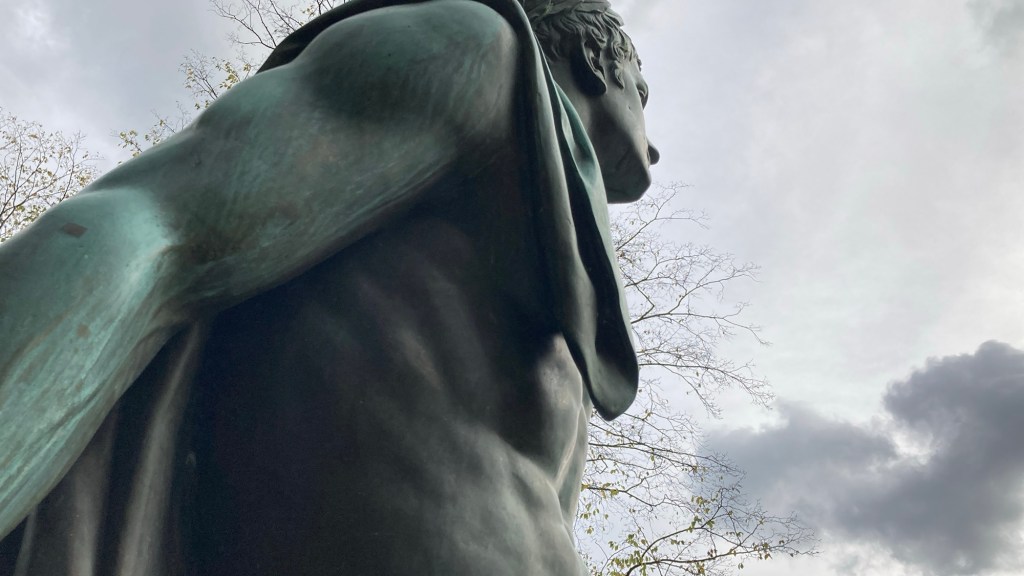
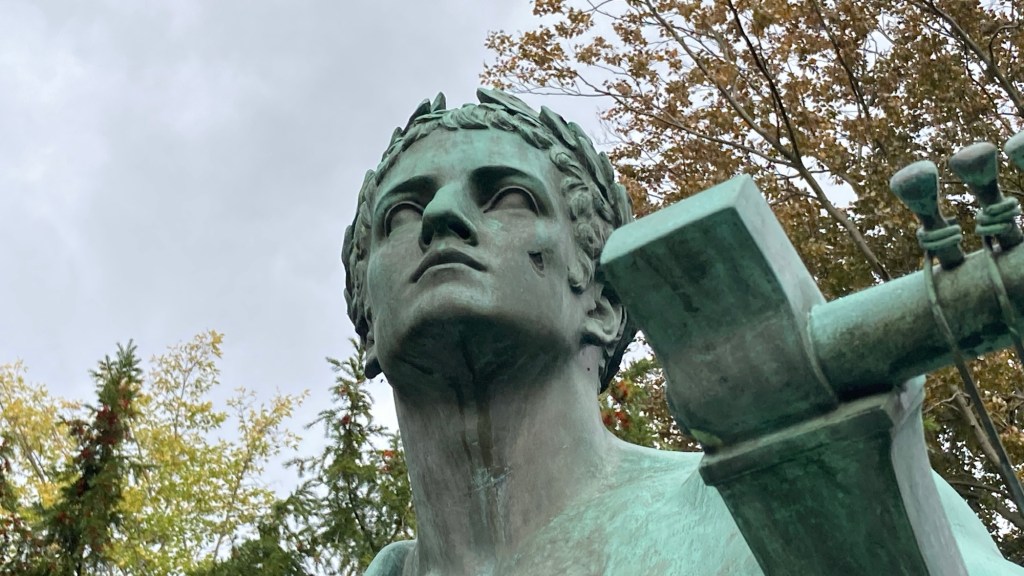
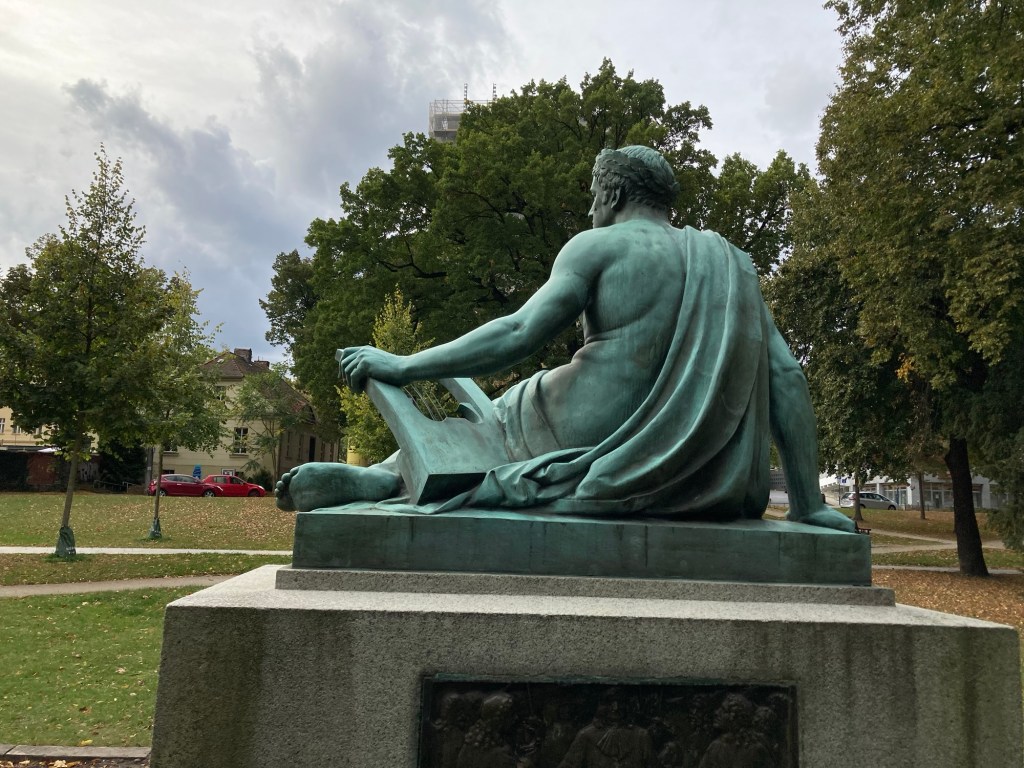
Well-documented demons haunted Kleist, who experienced war at first hand as a Prussian soldier in the 1790s, but they do not intrude on Frankfurt’s monument to the writer. Erected in 1910, just before the first centenary of his death and a few years before the First World War, it features a bronze statue in classical style with laurel leaves and lyre, looking away in contemplation. The bare torso and limbs radiate summer in the little park even in the chill of October.
It is a day for spending time indoors too and where better after descending the bell tower than among the customers in the Café Diana? Waitresses bear plates of hot sausage and Flammekueche, plum tart and coffee, around the tables.

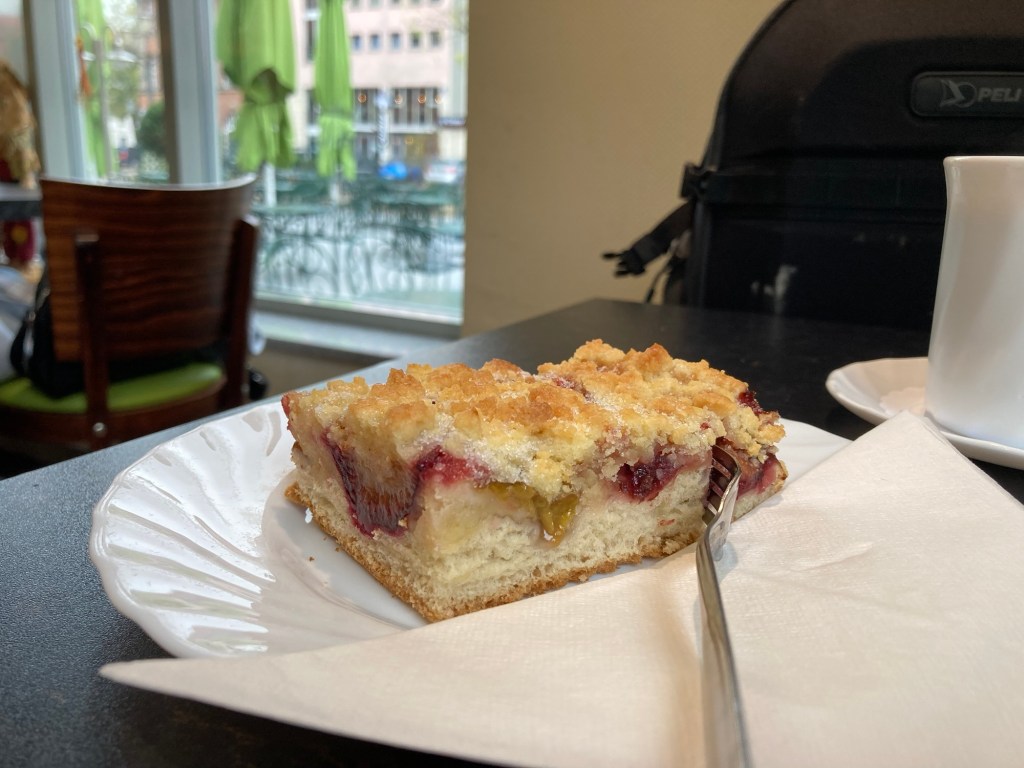
A woman with the gravitas about her of a doctor or a judge sits drinking hot chocolate with a sad-looking elderly man who appears to be her father. Japanese tourists grin like excited children as they work away at German food. A beaming young man jokes with a server as he points out pastries at the counter for taking away. Groups of voluble coated women troop in like geese. Company, warmth, comfort, food. What peace and life are for in Frankfurt.